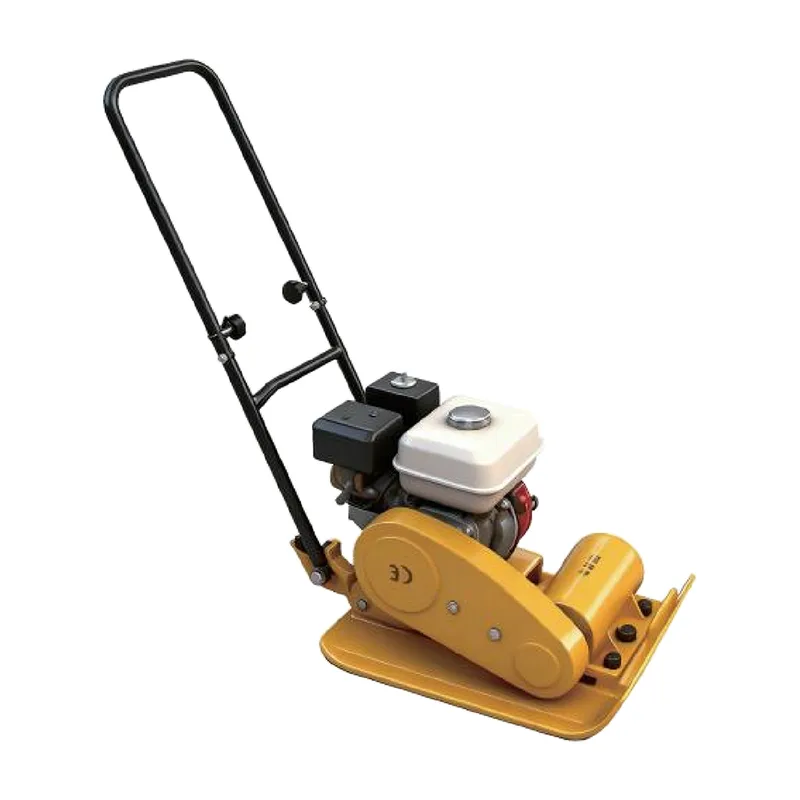
Tool Specs & Selection2026-09-278 min read
Plate Compactor Buying Guide: Centrifugal Force & Plate Width
LeoSourcing & OEM Specialist
Part of the Tool Specs & Selection series
Part of the Tool Specs & Selection series
How to read power tool spec sheets and choose the right series for your market
Ready-to-ship product series related to this article

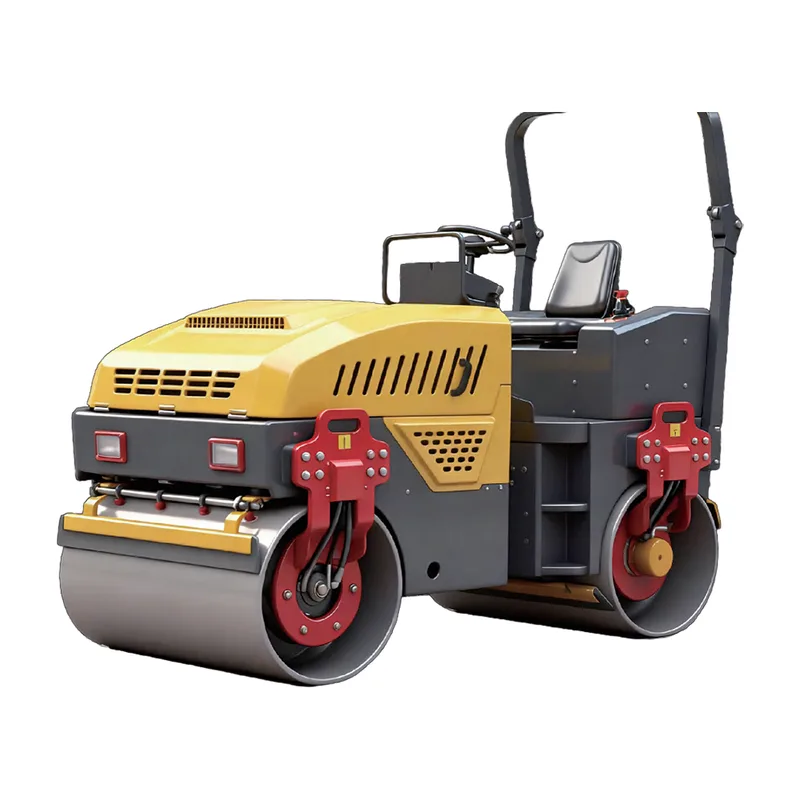
Operating weight tiers, excitation force, single drum vs double drum, line load, hydraulic drive and engine options — every field that matters on a walk behind roller compactor spec sheet, with an application decision matrix for road-maintenance and rural-construction importers.

Disc sizes, speed ranges, dust extraction, rotary vs random orbital: how importers read drywall sander and polisher machine spec sheets and build a two-line surface-finishing assortment around consumables.
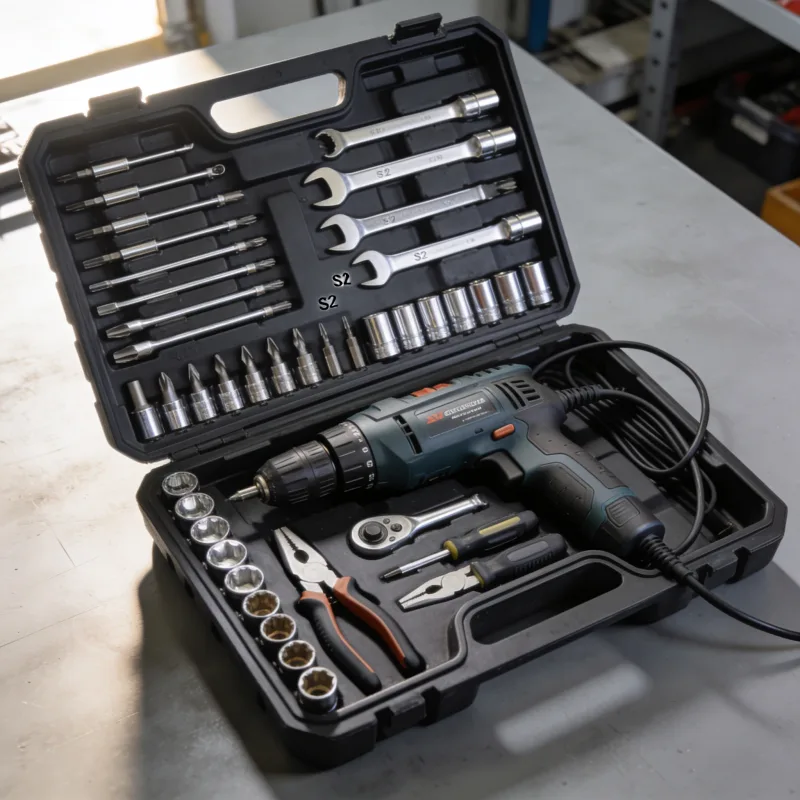
Piece counts sell the box; contents win the shelf. How importers read 108- to 146-piece kit configurations, verify set quality layer by layer, and structure a wholesale tool set order.
Every road programme, utility trench and paved yard ends the same way: with compaction. Market research houses place the wider compaction equipment market in the range of roughly USD 3.5–4.8 billion for 2025–2026, growing around 5–6.5% a year on the back of road maintenance and infrastructure spending across developing economies (construction-equipment market research reports, retrieved 2026-09-27). Inside that market, the plate compactor is the machine that reaches where rollers cannot — trench backfill, paver bedding, sidewalk and patch work, small slabs — which is exactly why it travels in the same containers as generators and water pumps across Central Asia, the Middle East and Africa.
For an importer, the plate compactor category is also one of the most spec-sensitive lines on the equipment shelf. Two machines that look identical in a photo can sit in different force classes, work different lift thicknesses and carry different engines — and a wrong-class machine either fails the engineer's density test on site or wastes money the customer never needed to spend. This guide walks every field that matters on a plate compactor spec sheet — centrifugal force, plate width, forward versus reversible drive, engine configuration, compaction depth, handling and wear parts — and closes with a decision matrix that maps machine classes to the four buyer types in most developing markets: landscape, trench, road maintenance and rental.
Centrifugal force is the headline rating of every plate compactor. An eccentric weight inside the exciter housing spins at the working frequency, and the rated centrifugal force — expressed in kilonewtons (kN) — is the dynamic load the plate delivers into the soil thousands of times a minute. It is the number that decides what the machine can densify and how thick a layer it can work.
In practical classes:
| Force class | What it handles |
|---|---|
| Roughly 5–8 kN | Sand and gravel backfill, paver bedding, landscaping, finishing passes |
| Roughly 8–12 kN | The general contractor class: trench backfill, crushed-base lifts, slabs |
| Roughly 12–15 kN | Heavy forward class: thicker granular lifts, demanding patch work |
| Reversible classes, commonly 10–25 kN | Sub-base and base layers, thick lifts, high-output area compaction |
(Typical industry classes — the binding figure is always the rated value on the model spec sheet.)
Two cautions when comparing. First, centrifugal force must be read together with machine mass and plate area: force acting through a light frame cannot mobilise deep soil, which is why credible spec sheets keep mass, force and plate size in step — they rise together through the classes. Second, working frequency (quoted in Hz or vibrations per minute) matters alongside force: higher-frequency settings finish and smooth surfaces, while lower-frequency, high-force classes drive thicker lifts. A supplier who quotes only one of the three numbers is quoting a fragment of the machine; ask for all three before the quotation goes further.
Plate widths across the common walk-behind ranges sit roughly between 350 and 600 mm, and the choice is a straight trade-off between access and output.
For an importer, plate width is also a shelf-position decision: one narrow and one wide SKU serve two different buyer conversations from the same container. And the honest advice to pass on to customers is the reverse of the buying instinct — choose the width the job fits, not the widest plate on the price list.
The most consequential choice in the category is between a forward plate compactor and a reversible plate compactor.
| Forward plate compactor | Reversible plate compactor | |
|---|---|---|
| Travel | One direction — the vibration itself propels the machine forward | Controlled travel in both directions |
| Typical force | Commonly 5–15 kN classes | Commonly 10–25 kN classes |
| Best at | Asphalt finishing, paver bedding, jointing sand, thin granular lifts | Base and sub-base layers, thicker lifts, high-output area work |
| Confined spots | Must be turned or skidded around by the operator | Compacts backwards out of a trench without turning |
| Weight and cost | Lighter, simpler, lower price | Heavier, more complex, higher price |
| Asphalt work | Standard patch tool with a water kit and polyurethane mat | Also used on asphalt where output matters |
The division of labour in the field is clean. Forward plates are finishing machines: thin lifts, surfaces and edges — and with a water tank and mat, the standard tool for asphalt patches and interlocking paver areas. Reversible plates are production machines: the extra force and two-way travel let them work thicker lifts and large areas, and let the operator back the machine out of a trench instead of lifting it around inside one. When the job scales past a patch into a carriageway or a large asphalt area, the next machine up is a roller — see where walk-behind road rollers fit against plates in that size of job.
For assortment planning, split the shelf by buyer rather than price: landscape and paving customers buy forward; utility contractors and anyone compacting base layers buy reversible; rental counters buy both, because their counter serves all of the above.
Soil compaction is common-sense mechanics: the vibrating plate rearranges particles and works air voids out of the material, and the effect decays with depth. That is why specification writers do not ask for one deep pass — they specify compaction in layers (lifts), at a target percentage of maximum dry density, commonly written as a percentage of the standard Proctor value, with 90–95% typical for general fill under slabs and pavements.
Working rules that hold across the category:
The buying insight for your market is training material as much as spec-sheet material: customers fail density tests when they lay one thick lift and hope the machine will fix it. A distributor who can explain lift discipline sells the right machine class the first time — and earns the re-order when the tests pass.
Plate compactors are engine-driven, and the engine defines the machine's service-life economics more than any other component.
Two sourcing disciplines pay here. First, engine-model commonality: a range built around one or two engine families lets you stock a single parts kit across the whole shelf. Second, nameplate honesty: the spec sheet should state the engine brand and model, rated power and starting system — a quotation that says only "5.5 HP engine" is quoting a category, not a component.
Plate compactors live on and off pickups, trailers and container floors, so handling features are purchasing criteria, not details:
| Application in your market | Recommended class |
|---|---|
| Landscaping, pavers, small slabs | Forward, roughly 5–8 kN, 350–450 mm plate, polyurethane mat |
| Utility trench backfill | Forward 8–12 kN sized narrower than the trench; reversible where turning is impossible |
| Road maintenance, asphalt patches | Forward 8–12 kN with water system and mat |
| Sub-base, large pads, access roads | Reversible, 15–25 kN class, 500–600 mm plate |
| Rental counter | One light forward plus one mid reversible covers both customer conversations |
File these per model before it goes into a container:
The difference between a factory and a middleman shows in the paperwork. Before committing a first order, demand:
The working rule on certification is honesty: no certification logos are claimed on the machines. The factory supports your market certification with test-ready spec sheets, samples and technical files, and the certificate that counts is the one issued in your name.
The plate compactor range runs AD-25351 to AD-25384 — thirty-plus gasoline-engine vibratory plates spanning the light-forward to heavy classes described in this guide — with factory spec sheets per model and OEM support across colour, kit and packaging. It ships alongside walk-behind road rollers under the same compaction equipment programme, and consolidates in mixed containers with generators and water pumps. Tell me the job mix in your market — how much trench work, how much paving, how much rental demand — and I will propose the class split, the packing data and a sample plan ready for your inspection.