Compliance Navigation2026-09-278 min read
CE Certification for Power Tools: The Importer’s Guide to CE Marking, Declarations and Technical Files
LeoSourcing & OEM Specialist
Part of the Compliance Navigation series
Part of the Compliance Navigation series
Certification pathways for importers — CE, SASO, SONCAP, EAC and PVoC — and the documentation a compliance-ready supplier provides
Ready-to-ship product series related to this article

How SONCAP certification for Nigeria and the KEBS PVoC programme for Kenya work for generators and water pumps: product certificates, per-shipment CoCs, the wider African family of schemes, fee and timeline ranges, and the factory's role.

How EAC certification works for power tools and equipment entering Kazakhstan and the EAEU: the EAC mark, the technical regulations of the Customs Union, certificate vs declaration, validity bands, and the factory’s role.

How Saudi conformity works for generators and power tools: PCoC and SCoC on SABER, the IECEE overlap, fee and timeline ranges, and the factory's role.
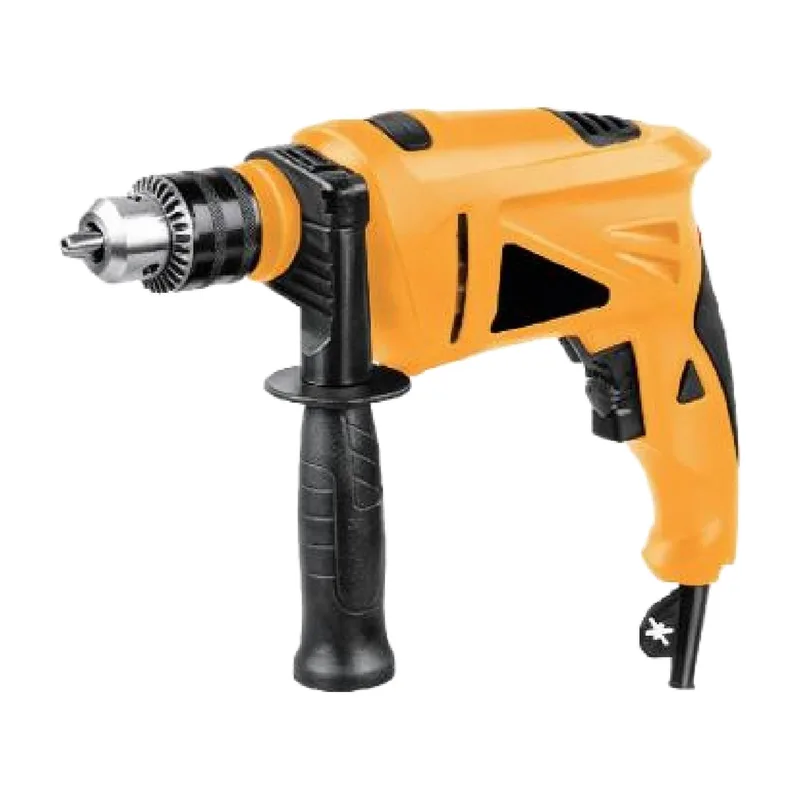
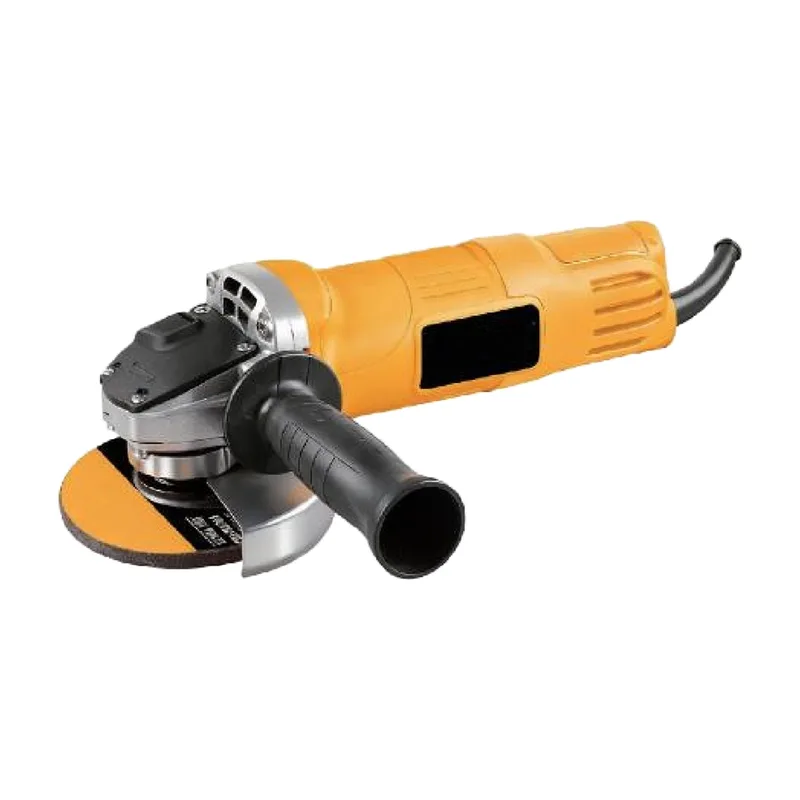
Every season, importers send Chinese tool factories the same request: "send us your CE certificate." The request sounds reasonable, and it is wrong in a revealing way. CE certification for power tools is not a certificate at all — no authority issues one, and no register holds it. The CE marking on an angle grinder or a rotary hammer is the manufacturer's self-declaration: a legal claim, made under a company's own name, that the tool meets every applicable EU requirement. The paperwork behind that claim is a signed Declaration of Conformity plus a technical file. Knowing who makes the claim, who signs it, and who answers when authorities ask is the difference between a clean import programme and a liability with your brand on it.
This guide walks the system the way an importer needs it: what CE marking actually is, which rules switch it on for power tools, who signs what, what sits in the technical file, and where the Chinese factory's responsibility ends and yours begins. The system is European, but its paperwork travels: many markets outside the EU reference CE-style documentation or EN standards in their own import rules, so a file built for Europe often earns its keep in Africa, the Gulf and beyond.
The CE marking is the manufacturer's visible declaration, fixed to the product, that it complies with all applicable EU requirements. Three properties matter most:
The practical translation: CE is a documentation discipline you own, not a document you buy.
A hand tool is not governed by one rule: the CE marking on power tools stands on several frameworks at once, each addressing a different risk:
Manufacturers demonstrate it through harmonized standards. For motor-operated hand-held electric tools the center of the system is the EN 62841 series — which superseded the older EN 60745 standards — structured as a general standard with part standards for specific tool classes: drills, grinders, saws. Applying them is voluntary but gives presumption of conformity with the requirements they address, which is why virtually every serious test programme for hand-held tools is built on the EN 62841 series rather than a bespoke argument. One scoping note: cordless platforms pull in additional battery-and-charger considerations your testing provider should price in at the start.
The Declaration of Conformity (DoC) is the single signed document in which the manufacturer states, model by model, which legislation the product complies with and which standards were applied. A valid DoC identifies the product, names the manufacturer, lists the applicable legislation, standards applied and any notified-body involvement, and carries the name, role, signature and date of someone empowered to commit the manufacturer. One DoC can cover a family of similar models; a vague "power tools — CE" sheet covering an entire catalogue is not that document.
Who signs it depends on a question importers often skip: who is the legal manufacturer? In EU product law that is whoever places the product on the market under its own name or brand, or redesigns and re-brands it. In an own-brand OEM programme — your name, your specification — that party is typically your company, with the Chinese factory as the documented manufacturing site. Where you import a factory's own-name catalogue product, the factory signs the DoC and you take on the distinct duties of the EU-side importer, detailed below.
Either structure can work. What does not work is the grey zone in between: your brand on the tool, somebody else's declaration behind it.
The DoC is the claim; the technical file is the evidence behind it. At framework level, a power tool technical file contains:
The file does not ship with the container, but it must exist and be producible — commonly for ten years from the last unit placed on the market, held by the manufacturer or its authorised representative established in the EU when the manufacturer sits outside it. The lesson importers learn the hard way: the file's inputs exist at the factory at order time or they never will — retrofitting them two years later is how compliance projects stall. Version the file like you version artwork: every component change or drawing revision re-triggers it.
The marking has no fee; testing does. As planning ranges from published laboratory and certification-body price guides: a third-party programme against the EN 62841 series commonly runs from several hundred to a few thousand USD per model, depending on scope and existing documentation; timelines run from days with valid existing reports to weeks for a full programme from zero (published laboratory and certification-body guides, retrieved 2026-09-27). These are planning figures, not quotations — scope, pricing and the governing legislation texts are confirmed with your testing provider. One budgeting insight: the testing bill scales with models, not containers, so fewer, better-chosen SKUs carry lower certification friction than a wide scattered assortment.
Importers routinely conflate the paperwork. The distinctions are simple and load-bearing:
| Document | What it is | Who produces and signs it | Who must hold it |
|---|---|---|---|
| Declaration of Conformity (DoC) | The signed legal claim of conformity, per product and legislation | The legal manufacturer — your company in an own-brand programme | Accompanies the product; supplied to authorities and importers on request |
| Technical file | The evidence set behind the claim: drawings, risk assessment, reports, declarations | Assembled by the manufacturer from factory inputs | Manufacturer or its EU-established representative; retention commonly ten years |
| Test report | Laboratory evidence against specific standards, for one model and revision | An accredited laboratory, commissioned by you or the factory | Whoever commissioned it; referenced by the technical file |
| Notified-body certificate | Only where assessment modules require one — not the norm for hand-held tools | A notified body designated under the applicable framework | Named recipient; referenced in the DoC when applicable |
The workable division of labour, in one screen:
| Duty or deliverable | You (brand owner / EU importer) | The Chinese factory |
|---|---|---|
| Legal manufacturer role, DoC signature | Yours in an own-brand programme | Only for its own-name catalogue models |
| Marking and label execution | Approve artwork, verify correctness | Execute per the approved file |
| Technical file | Own and maintain it | Supply drawings, spec sheets, component declarations |
| Testing | Commission and own the reports | Provide samples, engineering answers |
| Market-surveillance interface | Respond to authorities | Support with data on request |
| Instructions and languages | Decide the market set | Produce per approved artwork |
Two boundary rules keep this clean. First, no inherited declarations: a DoC from the factory's other customer names that customer's products, not yours, and lends you nothing. Second, no marking without structure: a CE logo with no declaration and no file behind it is the exact failure market surveillance exists to catch. We do not misuse the CE logo — the marking on your goods is backed by a Declaration of Conformity and a technical file structured around your brand and your markets' legislation, the only version that survives contact with an inspector. How that discipline fits a full OEM order — spec-sheet control to artwork approval — is laid out in the OEM power tools manufacturing guide.
On the importer side, the framework still assigns you real work: verify that products carry the marking and that a DoC exists before placing them on the market; ensure the manufacturer's identification and, where required, your own contact details appear on product or packaging; keep a register of non-conforming products and corrective measures; cooperate with market-surveillance authorities on request. That is exactly what a customs query or distributor audit asks to see — "the factory handled it" is not an answer the framework recognises.
Importers running multi-market programmes often confuse the two systems; they run in opposite directions. The Saudi route is pre-shipment and third-party: a Product Certificate and a Shipment Certificate are issued on SABER before customs releases a consignment, as covered in the SASO and SABER certification guide. The CE route is self-declaratory: you place the product on the market on your own claim, and authorities verify afterwards. Under SABER, the certificate is the compliance; under CE, the quality of your documentation is. The good news for dual-market programmes: the same technical file feeds both, so a file built properly for CE is most of the way to a SABER application.
Run this before the balance payment, not after arrival:
The factory side of this system is not certification — it is cooperation, and it is measurable: complete, revision-controlled spec sheets for every model across the power tools catalogue — from angle grinders and impact drills through rotary hammers; samples shipped to your laboratory on schedule; drawings and component declarations released for the technical file rather than guarded; engineering answers measured in days, not weeks. Every item in that list appears in the checklist above: supplier documentation quality is the programme's load-bearing wall in CE markets.
OEM changes none of this and raises the stakes slightly: your name on the tool makes your signature on the declaration the natural structure, and the file must therefore be built for you from the first sample.
The efficient first step is small: two or three target models, destination markets, rough volumes. That returns exact spec sheets, a documentation plan fitted to your markets' current rules, and a realistic calendar to your port — with the OEM scope for your brand defined up front. If your programme spans categories — tools plus engine generators, on the same machinery and EMC logic — the generator import guide covers the selection side. Send the shortlist through the inquiry form or WhatsApp, and I answer with the documentation package your market will actually ask for.