Tool Specs & Selection2026-09-278 min read
Drywall Sanders and Polisher Machines: Spec Guide for Importers
LeoSourcing & OEM Specialist
Part of the Tool Specs & Selection series
Part of the Tool Specs & Selection series
How to read power tool spec sheets and choose the right series for your market
Ready-to-ship product series related to this article

Operating weight tiers, excitation force, single drum vs double drum, line load, hydraulic drive and engine options — every field that matters on a walk behind roller compactor spec sheet, with an application decision matrix for road-maintenance and rural-construction importers.

Centrifugal force, plate width, forward vs reversible, engine power and lift depth: every field on a plate compactor spec sheet explained, with a decision matrix for landscape, trench, road-maintenance and rental buyers.
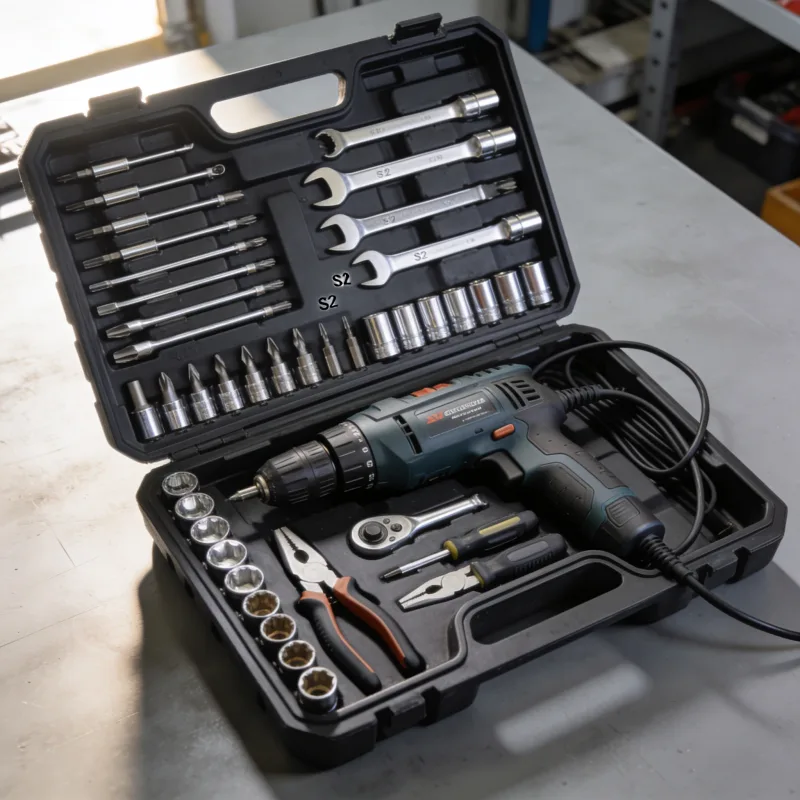
Piece counts sell the box; contents win the shelf. How importers read 108- to 146-piece kit configurations, verify set quality layer by layer, and structure a wholesale tool set order.
Every interior renovation ends in sanding, and most vehicle reconditioning ends in polishing. The two machines that own this work at trade level are the long-reach drywall sander and the polisher machine — and for hardware importers they form a natural pair: overlapping buyers, the same counter, and the same consumables reorder cycle. The demand base is large on both sides. Annual global home-improvement and renovation spending is commonly estimated above USD 2 trillion, and the car-care and detailing services market is put in the tens of billions of USD with steady single-digit yearly growth (industry market-report estimates, retrieved 2026-09-27).
For an importer, the commercial logic of carrying both lines is repeat purchase. A wall sander eats sanding discs through every finishing job; a polisher consumes pads and compound with every detail. This guide reads the spec sheets of both machine families the way a sourcing meeting does — field by field, with the channel logic attached.
The drywall sander and the polisher machine sit in different catalogues but sell to the same neighbourhood: renovation contractors, plastering and painting crews, and building-material shops on one side; car-care studios, stone masons and wood finishers on the other. In developing-market hardware retail, the dealer who equips a contractor's finishing phase is usually also the dealer who equips his reconditioning and care work.
| Channel fact | Drywall sander line | Polisher machine line |
|---|---|---|
| Primary buyer | Renovation and finishing contractors, building-material shops | Detailing studios, car-care chains, stone and wood finishers |
| What triggers the purchase | The finishing phase of every interior job | Reconditioning jobs and seasonal care cycles |
| Core consumable | 180–225 mm hook-and-loop sanding discs | Backing, foam and wool pads; compounds |
| Repurchase rhythm | Continuous through the finishing season | Per job, with seasonal peaks |
| Margin shape | Machine sold once, discs reordered monthly | Machine sold once, pads reordered per job |
| Natural cross-sell | Dust vacuums, plaster and paint tools | Compounds, microfibre cloths, stone pads |
Carried together, the two lines let one counter serve the whole surface-finishing trade — a defensible position inside a broader power tools programme, and one purchase order instead of two supplier files.
The mainstream wall sander carries a 180–225 mm disc, and each size inside that band is a positioning decision:
Discs mount hook-and-loop. Confirm the hole pattern — commonly six to nine holes — aligns with the head's dust channel, or extraction quietly fails and the contractor blames the machine.
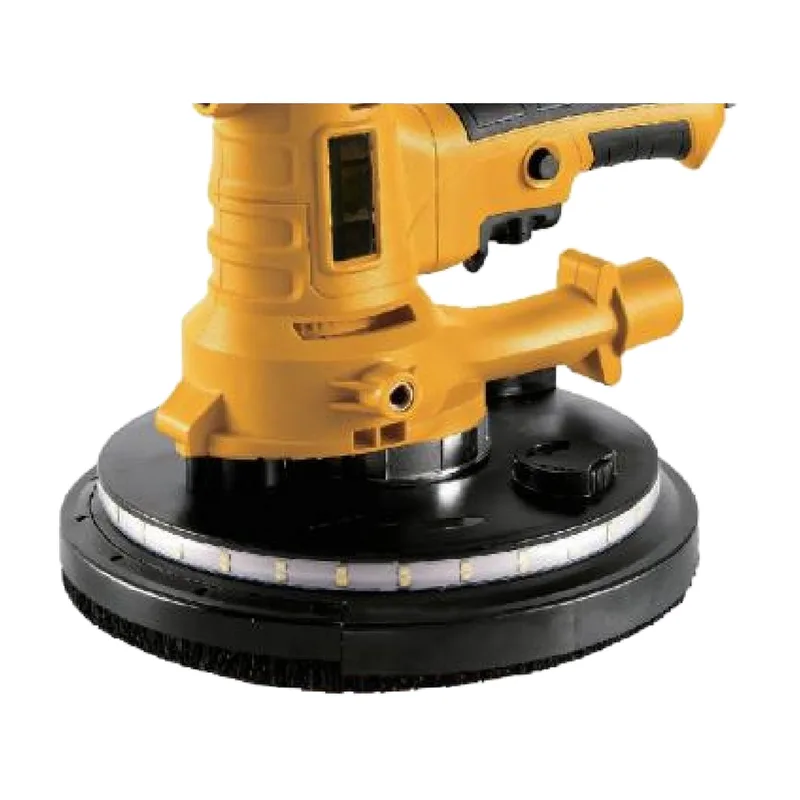
Drywall dust is the pain point the entire category exists to solve, which is why a dust extraction sander is specified as a system, not just a motor. Read the sheet for:
Machines in this class typically run roughly 1,000–2,000 rpm (some models toward 2,300) with a stepless variable-speed dial: low for fine final passes and corner work, high for stripping old paint and texture. A fixed-speed machine saves little at production and sells worse at retail — stepless control is the mainstream ask in every renovation market.
An LED ring around the head is a genuine finishing feature: raking light exposes ruts, scratches and skipped patches that ambient lighting hides. Add a firm adjustable D-handle, a carry bag for crew transport, and a cable with proper strain relief, and the machine is demo-ready out of the box.
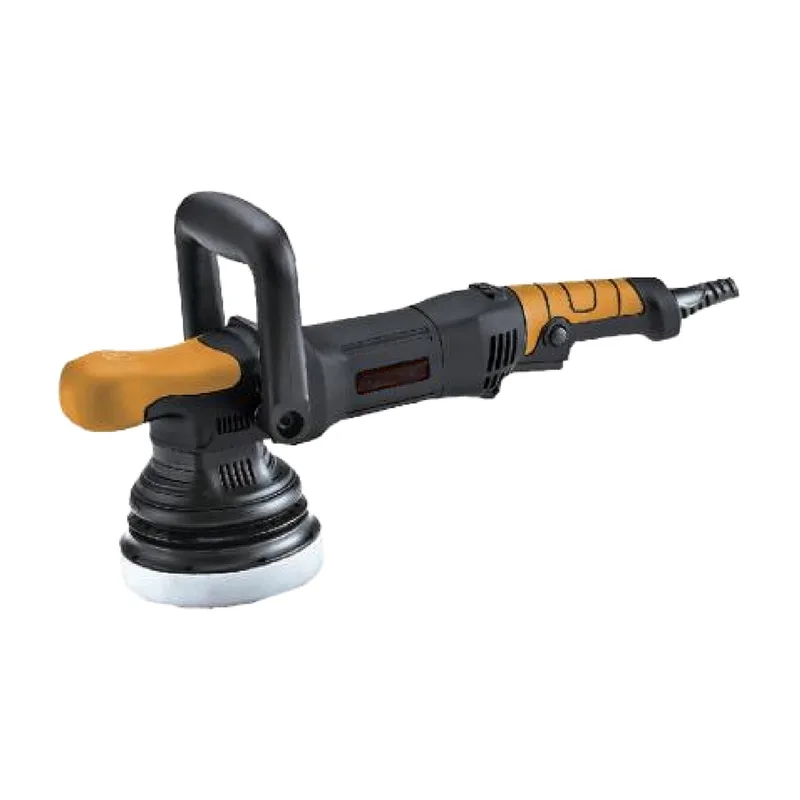
The first field on any polisher sheet is the motion type, and it is a channel decision more than a technical one:
Studios and stone shops buy rotary; retail and car-care channels buy random orbital. Stock the split your market's skill level dictates, and let the pads carry the differentiation.
125 mm for compact spot work and tight curves; 150 mm — the detailing mainstream, where most foam-pad systems are built; 180 mm for flat panels, stone slabs and floors. Plan one machine platform per pad size you commit to stocking, because pads, not machines, are what the channel reorders.
On either type, check for a continuous speed-control dial, slow start (it keeps compound on the pad instead of the wall) and a side handle that mounts in two positions.
The channels divide cleanly. Car detailing centres on 150 mm random-orbital platforms with graded foam pads and compounds; stone and marble work wants 180 mm rotary machines with wool bonnets and water feed discipline; wood finishing runs smaller random-orbital machines with abrasive discs. Importers who respect the boundary stock pads per channel — blurring it leaves pads unsold on the shelf. The polisher machine range covers rotary and random-orbital classes for all three channels.
| Field | Drywall sander | Rotary polisher | Random orbital polisher |
|---|---|---|---|
| Disc class | 180–225 mm | 125–180 mm | 125–150 mm, 150 mainstream |
| Motion | Rotating disc on a long-reach pole | Forced rotation, fixed axis | Eccentric, free-spinning |
| Speed | ~1,000–2,000 rpm, stepless | ~600–3,500 rpm, variable | ~2,500–6,000 opm, variable |
| Skill demanded | Low to moderate | High | Low |
| Finish risk | Low with grit discipline | Burn-through in unskilled hands | Paint-safe by design |
| Core consumables | Hook-and-loop sanding discs | Wool and backing pads, compounds | Foam pads, microfibre cloths |
| Channel | Renovation and finishing | Professional studios, stone | Detailing retail, car-care |
The machine is sold once; the refill is sold forever. Every finishing job pulls hook-and-loop sanding discs in the 180–225 mm class through the wall sander, and every reconditioning job pulls foam pads, wool bonnets and compound through the polisher. Discs move by the hundred-sheet carton; pads move as mixed-grit or mixed-hardness sets. The unit values are small, the margins are healthier than the machines, and the reorder never stops.
That reorder stream is the commercial reason to carry these two lines together: the machines open the contractor and studio accounts, and the consumables hold them on your ordering calendar. The counter logic is identical across both categories — same hook-and-loop display, same reorder rhythm — so one warehouse slot and one display wall serve two machine families. The importer who controls disc and pad supply effectively controls the season of every contractor and studio on the list.
Most destination markets run 220–240 V, 50/60 Hz; 110–120 V, 60 Hz markets need dedicated production runs specified as such at order time. Fix the plug type, rating-plate language and label artwork inside the order-confirmation package rather than the post-shipment fix list — the OEM power tools manufacturing guide lays out exactly where artwork approval sits in the order process. No certification logos are printed on products; documentation, samples and spec-sheet support back your own market approvals.
A working opener assortment for a mixed-channel market:
For the metalworking side of the same contractor counter, the angle grinder buying guide maps the adjacent 115/230 mm assortment and its channel split.
File these per model before the container:
The drywall sander line — long-reach machines with integrated dust extraction — and the polisher range ship from the same power-tools programme. That means one supplier file, one artwork cycle and one mixed container for both lines, with matched disc and pad cartons quoted alongside the machines. OEM is standard practice here: housing colour, kit contents, retail packaging and your label, with samples before volume and factory spec sheets listing every field in the checklist above.
Tell me the channel split you serve — contractors versus studios, 220 V versus 110 V markets, colour box versus carry bag — and I will propose the exact SKU ladder for both lines, with consumables priced into the first order. Enquiries are answered with spec sheets and sample options, not delays.