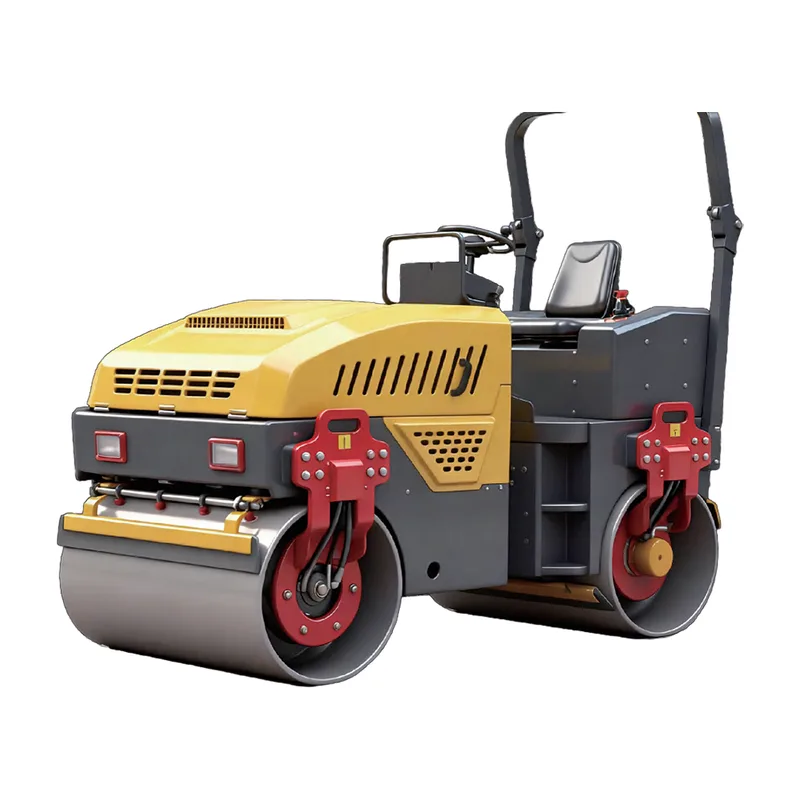
Tool Specs & Selection2026-09-278 min read
Walk-Behind Roller Compactor Guide: Single Drum vs Double Drum
LeoSourcing & OEM Specialist
Part of the Tool Specs & Selection series
Part of the Tool Specs & Selection series
How to read power tool spec sheets and choose the right series for your market
Ready-to-ship product series related to this article

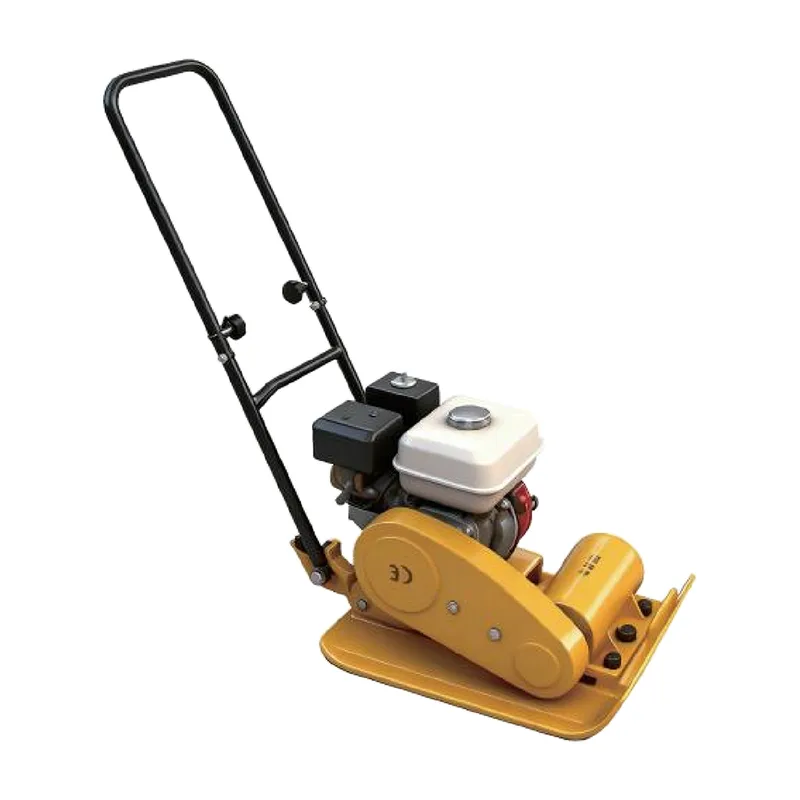
Centrifugal force, plate width, forward vs reversible, engine power and lift depth: every field on a plate compactor spec sheet explained, with a decision matrix for landscape, trench, road-maintenance and rental buyers.

Disc sizes, speed ranges, dust extraction, rotary vs random orbital: how importers read drywall sander and polisher machine spec sheets and build a two-line surface-finishing assortment around consumables.
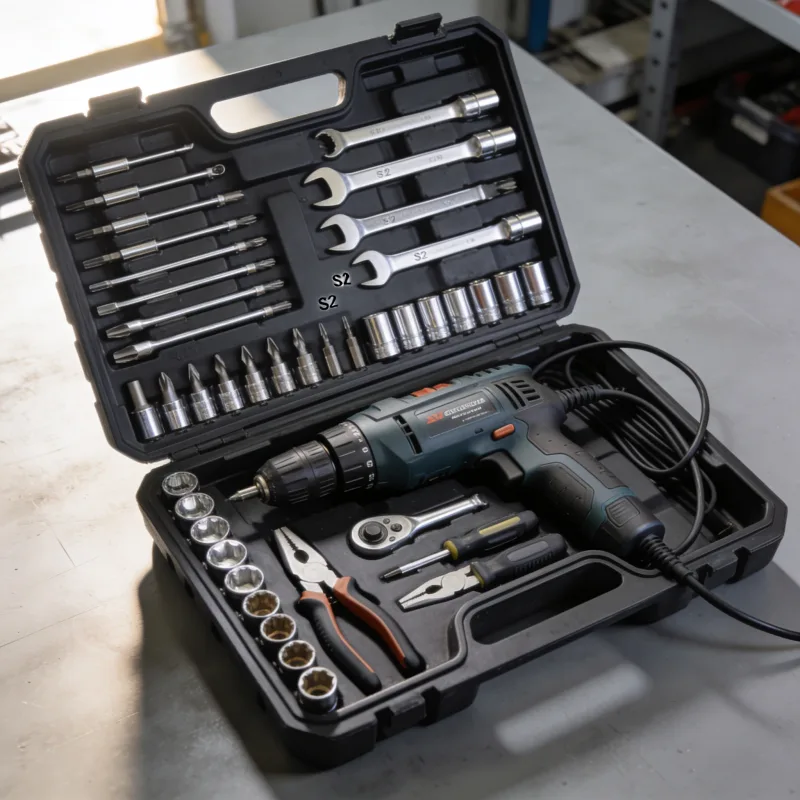
Piece counts sell the box; contents win the shelf. How importers read 108- to 146-piece kit configurations, verify set quality layer by layer, and structure a wholesale tool set order.
Rural connectivity is one of the largest sustained infrastructure lines in the developing world: multilateral development banks alone finance road construction, rehabilitation and maintenance projects across Asia, Africa and Latin America at roughly USD 5–9 billion a year (multilateral development-bank project portfolios, retrieved 2026-09-27), and national rural-road and road-maintenance programmes account for several times that figure. Almost none of those kilometres are built by full-size paving trains. They are built by small crews with walk-behind and towable machines — and on most of those kilometres, the machine that produces the density the engineer tests is the walk behind roller compactor: a self-propelled vibratory roller small enough to work where a ride-on machine cannot be moved, and heavy enough to carry a road specification.
For an importer, it is also the highest-responsibility line on the compaction shelf. A disappointing generator costs a re-order; a roller that cannot reach specified density costs its owner the acceptance payment on a road contract. And two machines that look identical in a photo can sit two operating-weight classes apart, work different layer thicknesses and carry different engines. This guide walks every field that matters on the spec sheet — single drum vs double drum, operating weight, excitation force and frequency, drum width and line load, drive system, water sprinkling, engine configuration, handling and spares — and closes with a decision matrix that maps machine classes to the applications dominating developing markets.
Both machines sit on the same shelf and are bought by the same contractors, but the boundary between them is physics, not marketing. A plate compactor drives vibration through a plate that travels with the operator, and it is superb in that role — trench backfill, paver bedding, patches and edges, effective on roughly 100–300 mm granular lifts; the full logic of that machine is covered in our plate compactor buying guide. The walk behind roller takes over when any of three conditions appears:
The honest shelf advice to pass on: plates own confined spots and finishing, rollers own the road. Sell them as one programme, not as competitors.
The first fork in any walk-behind roller specification is drum count, and it maps directly to layer type.
| Single drum walk-behind roller | Double drum (tandem) walk-behind roller | |
|---|---|---|
| Layout | One vibrating steel drum at the front, wheels or a plain drum behind | Steel drums on both axles; one or both vibrating |
| Home ground | Granular base and sub-base: gravel, crushed stone, sand-gravel mixes | Surface work: asphalt courses, patching, surface finishing |
| Traction behaviour | Rear wheels grip loose granular material; compacts as it drives | Steel-on-steel contact is slick on loose gravel; at its best on compacted or paved surfaces |
| Asphalt work | Possible with a water kit, but not its design centre | The standard machine, with water sprinkling on the drums |
| Assortment role | The base-layer SKU | The asphalt and finishing SKU |
| Complexity and price | Simpler, lower | More drums, more exciter, more water plumbing; higher |
In the walk-behind class the tandem is the most common configuration on the market — most municipal patching and asphalt work runs on it. Single-drum walk-behinds earn their slot where gravel-road base dominates the order book, because the rear wheels carry traction on material that would spin a steel drum. For assortment planning, one of each serves both layer conversations from the same shipment.
Weight is the class-setting number on the sheet, because it decides the layer thickness the machine can densify, the traction it can plant, and the logistics it demands.
| Class | Typical duty |
|---|---|
| Under 1 t | Sidewalks, cycle paths, shoulders, trench-surface reinstatement, patching — the machine a small crew can move around a yard |
| 1–3 t | The mainstream tier: village-road base, parking areas, estate roads, asphalt patching at scale |
| 3–5 t | The heavy walk-behind class: full base layers and asphalt courses on low-volume roads, still trailer-towable |
Weight also sets the money. Across factory-direct walk-behind vibratory roller programmes, reference unit prices commonly sit in the roughly USD 1,000–3,500 FOB band across these tiers (supplier reference-price ranges, retrieved 2026-09-27) — treat them as planning ranges, with the binding quotation set per model and configuration.
The drum of a vibratory roller carries an eccentric shaft driven at the working frequency, and the rated excitation force — expressed in kilonewtons — is the dynamic load delivered into the layer. Across walk-behind classes, common-sense bands hold: excitation force commonly sits in the roughly 10–40 kN range rising with machine class, and working frequency around 60–70 Hz (roughly 3,600–4,200 vibrations per minute).
Two reading disciplines apply. First, force must be read together with operating mass: the same kN rating through a heavier frame mobilises material deeper, which is why credible spec sheets move mass, force and drum size up through the classes together. Second, frequency and force trade off against the job — higher-frequency, lower-amplitude settings suit surface finishing and asphalt, while high-force settings drive thicker granular lifts. A supplier quoting only "strong vibration" without kN and Hz on the sheet is quoting a fragment of the machine.
Drum widths across walk-behind classes commonly run from roughly 400 to 900 mm, and the choice trades access against output: narrow drums reach sidewalks, shoulders and reinstatement strips; wide drums cover a lane in fewer passes.
The number that disciplines the comparison is line load — operating weight divided by drum width, commonly quoted in kg/cm. Two machines of the same weight class can carry different line loads because of drum width alone: the wider drum spreads the same mass more gently and shallower, the narrower drum concentrates it. Walk-behind classes commonly land in the roughly 5–30 kg/cm band, rising through the weight tiers. When a quotation looks strong on weight but thin on width, calculate the line load before concluding anything — it is the honest comparator between machines of different widths, and a credible supplier states it on the sheet.
How the machine moves and vibrates is a service-life decision, not a gadget choice.
For markets with thin hydraulics coverage, the honest question to the factory is not "hydraulic or not" but "what wears, what is stocked, who can fix it" — then buy the wear-parts line with the machine.
On bituminous work the sprinkler system is as important as the drum. Hot asphalt picks up on dry steel and tears the mat; a tank feeding filtered water to nozzles on each drum keeps the steel clean and the surface intact. Check four fields: tank capacity (commonly quoted in the tens of litres, rising with machine class), a filter that survives site water, per-drum nozzle coverage, and scrapers that keep the drums clean on granular work. A machine sold into asphalt markets without a credible water system is not discounted — it is mis-specified.
Walk-behind rollers are engine-driven, and the engine defines the machine's service economics.
Two sourcing disciplines carry over from the plate line. Engine-model commonality across the shelf lets one parts kit serve every machine in the container. Nameplate honesty — brand, model, rated power and starting system on the sheet — separates a component quotation from a category quotation.
A walk-behind roller lives on trailers, pickups and container floors, so handling features are purchasing criteria:
Every vibratory roller is a wear-parts business attached to a machine. The scheduled consumables are the rubber vibration dampers between exciter and frame (the designated wear item of the whole category), drum and eccentric bearings, engine filters (air, oil, fuel), water-system nozzles and scrapers, and hydraulic hoses and seals on hydrostatic machines. A distributor who stocks these keeps every sold roller working; one who does not watches the second order go elsewhere. Before the first container, ask the factory for a wear-parts kit with exploded diagrams and per-part pricing — and treat the willingness to quote it as a supplier test in itself.
| Application in your market | Recommended configuration |
|---|---|
| Village and rural gravel roads, base course | Single drum, 1–3 t, high-force excitation class |
| Asphalt patching, thin overlays, surface finishing | Double drum, 1–2 t, water system, both drums vibrating |
| Sidewalks, cycle paths, shoulders | Double drum under 1 t, narrow drum |
| Trench-surface reinstatement strips | Under 1 t with the narrowest drum that clears the strip; plates inside the trench itself |
| Parking areas, estate roads, sub-base slabs | 1–3 t class; double drum where surface finish matters |
| Rental counter | One under-1 t tandem plus one 1–3 t class covers most conversations |
File these per model before it goes into a container:
The difference between a factory and a middleman shows in the paperwork. Before committing a first order, demand complete per-model spec sheets covering every field above — not a brochure page, a data sheet — plus samples tested in your own conditions before volume, inspection access during the run, and OEM terms covering housing colour, decals, kit configuration and packaging. How sampling, approval and pre-shipment inspection actually run is walked through in our OEM power tools manufacturing guide; the same mechanics apply across the compaction range. Ask also for documentation support on your destination-market conformity route — for the Central Asian compaction trade, the requirements are mapped in our EAC certification guide for Kazakhstan and Central Asia. The working rule on certification is honesty: no certification logos are claimed on the machines, and the certificate that counts is the one issued in your name.
The walk-behind roller is bought job-first: the layer, the width and the surface decide the class, and the class decides the sale. Bring me the job mix in your market — how much village-road base, how much asphalt patching, how much sidewalk and reinstatement work, how much rental demand — and I will propose the class split from the walk-behind road roller range, with full spec sheets per model, packing data and a sample plan ready for your inspection. It ships alongside plate compactors under the same compaction equipment programme and consolidates in mixed containers with generators and water pumps — one supplier, one spec-file discipline, one container plan for your whole equipment shelf.