OEM Import Playbook2026-09-278 min read
How to Import Generators from China: The Step-by-Step Importer Playbook
LeoSourcing & OEM Specialist
Part of the OEM Import Playbook series
Part of the OEM Import Playbook series
Step-by-step OEM sourcing: inquiries, sampling, QC, container loading and import logistics
Ready-to-ship product series related to this article

How experienced importers run OEM sampling and pre-shipment inspection: golden samples, the three factory QC gates, AQL sampling levels under GB/T 2828.1 / ANSI/ASQ Z1.4, report must-haves, and handling a failed lot.

How CBM calculation and a disciplined container loading plan decide your freight cost per unit: carton math with a worked example, 20GP vs 40HQ usable volume, heavy versus volumetric cargo, mixed loading ratios, and the pre-order loading checklist.
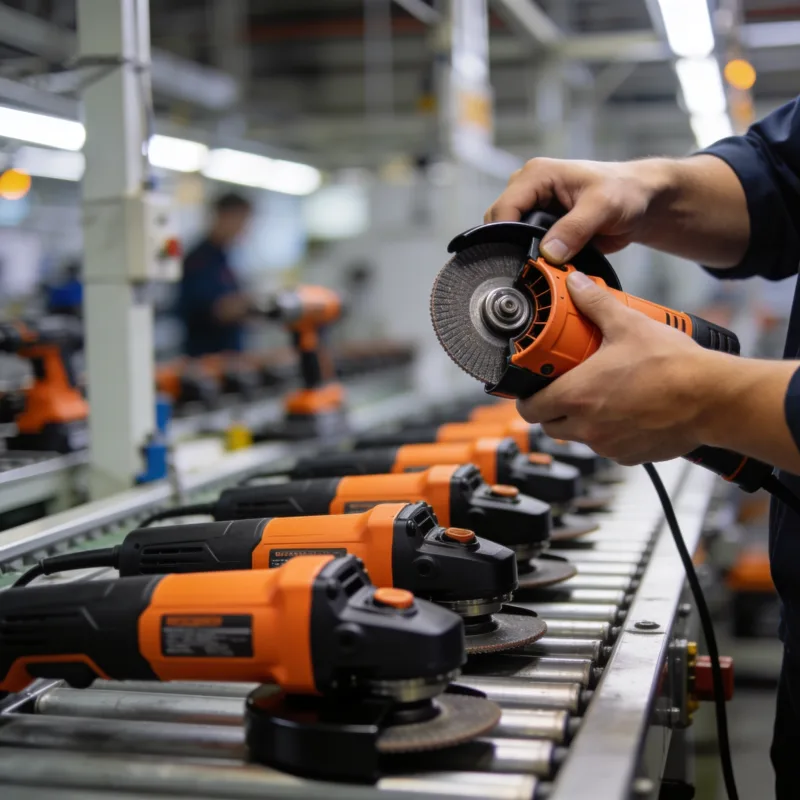
From RFQ to loading: the six-phase OEM process for custom-brand power tools — sampling, production, inspection — with the documents and pitfalls at each step.
Across most of Sub-Saharan Africa, a generator is not backup equipment — it is primary infrastructure. Search behaviour confirms the demand base: generator-related queries run year-round and concentrate in West and East Africa and South/Southeast Asia, with Nigeria and Kenya consistently among the strongest regions (Google Trends, regional comparison, retrieved 2026-09-27). The supply side matches: China is one of the world's largest exporters of electric generating sets, with official trade statistics of the kind published by UN Comtrade putting annual exports in the multi-billion-USD range in recent years (retrieved 2026-09-27). For an importer in Lagos, Accra, Nairobi or Manila, the decision to import generators from China is not one sourcing option among several — it is the category's default supply path. Where the demand is heading is drawn in our China generator export market trends overview.
What separates importers who build a durable generator line from those who lose their first container is process discipline. This guide walks the generator import process in the order you will actually live it — supplier verification, spec confirmation, sampling, certification, production, inspection, shipping and payment, and spares — and at each step separates what you do from what the factory provides, because most import failures are confusions about that boundary.
Candidates come from three channels: B2B marketplaces and directories, trade fairs such as the Canton Fair, and factory websites with their own export pages. The channel matters less than the verification, which is fast when you know what to ask for.
Start with documents: a business licence with a unified registration code, verifiable export experience in your product class, and — most diagnostic of all — complete spec sheets per model. A supplier that ships containers writes spec sheets with rated output, engine model, starting system, packing dimensions and carton quantities; a supplier that ships samples writes marketing bullets. Ask for references in markets similar to yours, and expect technical answers in days, not weeks.
Before a deposit changes hands, verify physically. A live video walkthrough of the assembly and test lines is the low-cost option; an on-site audit by a third-party inspection agency typically costs a few hundred USD and produces a written report (published agency price lists, retrieved 2026-09-27). For a first order of any size, either is cheap insurance.
You own: the shortlist, the verification questions, the reference checks, the audit decision. The factory provides: licence documents, export record, complete spec sheets and packing data, a live factory walkthrough, and technical answers on a stated clock.
Generator specifications are where marketing meets physics, and the import process punishes imprecision twice — once at customs, once at your customer's counter. Four decisions drive everything else:
| Decision | What it determines | Typical answers for African and Southeast Asian markets |
|---|---|---|
| kW class | Price point and target buyer | 2.5–5 kW for households and shops; 5–7.5 kW for trades, rental and small sites |
| Phase and voltage | Compatibility with local wiring | Single-phase 220–240 V for retail; three-phase 380–415 V for workshops and sites |
| Fuel | Cost per running hour and duty cycle | Petrol for portable classes; diesel once duty turns continuous — see the petrol vs diesel generator guide |
| Frame | Noise level and price tier | Open frame for price-driven markets; canopy for urban and night use — the silent generator guide covers the decibel logic |
Then read every quotation against four technical anchors:
You own: the market's wiring reality, the assortment plan, the unit in which you compare quotes. The factory provides: rated data per model, engine and alternator configuration, socket options, and the spec-sheet revision each quotation points to.
Samples convert spec sheets into physical evidence. Order samples of the shortlisted models and check each against its written sheet — not its listing images: output on the label, starting behaviour, socket fit, frame welds, and the exact packing configuration. If you can, run the sample under load for an hour; voltage behaviour under a real appliance tells you what a data sheet will not.
Keep the approved sample as the arbitration standard for production and final inspection. Then scale deliberately: a first order that mixes two or three models in one container is standard practice in this trade — it tests which kW class moves in your market before you commit volume to one of them.
West and East Africa run conformity programmes that must be planned before production, not after loading: SONCAP for Nigeria, PVoC for Kenya, and CoC-type schemes of varying scope across other markets in the region. The structural rule is the same everywhere: the certificate belongs to the importer of record. Two importers shipping the identical generator each run their own certificate — and certification arranged only after goods arrive is the classic cause of demurrage-laden first containers.
The workable division of labour mirrors the one described for Europe in the CE certification importer guide: you own the scheme relationship and the application; the factory provides the technical file — spec sheets, component documentation, samples for any required testing, and fast answers to the certification body's queries. No certification logos are claimed on products; the certificate your market trusts is the one issued in your name.
The purchase order freezes four layers: the model list with spec-sheet revision references, the OEM scope (colours, decals, packaging and labelling artwork), the commercial terms, and the inspection arrangement. Artwork is the classic delay source — approve every language version in writing before production day one.
Production for confirmed generator orders typically runs 30–45 days after approvals. What separates clean programmes is milestone reporting: photo and video at assembly, at test-run and at packing, with inline quality gates at incoming components, on-line assembly checks and a packing audit before cartons are sealed. Ask how those gates are documented; the answer predicts what the three hundred units behind sample one will look like.
You own: the purchase order, the approvals, the calendar. The factory provides: milestone reporting on a stated rhythm, inline QC records, and early warning when anything drifts.
Inspect before the container is booked, while remediation is still cheap. A generator inspection plan has four stations: run tests on units drawn from sealed cartons, label and spec verification against the sheet, a contents audit (accessories, manuals, tools), and packing verification — carton counts, weights, markings and language versions. Your own inspector, a third-party agency, or a documented factory inspection report with photographic evidence: the arrangement is flexible; the standard is that the approved sample is the referee.
Freight runs on two structural decisions. The first is the Incoterm:
| Term | Who arranges what | Where it fits |
|---|---|---|
| EXW | You collect at the factory and run all export formalities | Importers with their own forwarder in China |
| FOB | Factory delivers on board at the origin port; you book the ocean leg | The default for most first orders — and the most comparable quote basis |
| CIF | Factory books ocean freight and minimum insurance | Simple first shipments; still worth quoting against your own forwarder |
The second is payment. As general B2B trade practice rather than any supplier's rule: telegraphic transfer of roughly 30% deposit with roughly 70% balance against a bill-of-lading copy is the most common first-order structure; letters of credit at sight appear on larger orders and newer relationships that want bank assurance on both sides (trade-practice ranges — confirm with your supplier and bank, retrieved 2026-09-27).
| Method | How it works | Where it fits |
|---|---|---|
| TT ~30/70 | Deposit at order, balance against B/L copy | Most first and repeat orders in this trade |
| TT staged by milestone | Deposit, balance split at inspection and loading | Orders where inspection results gate the balance |
| L/C at sight | Banks exchange documents against payment | Larger orders and new counterparties needing bank-assured timing |
The document set to demand: bill of lading, commercial invoice, packing list, certificate of origin, and the destination market's CoC where one is required. Ocean transit from Chinese ports runs roughly three to five weeks to major East African ports and roughly four to eight weeks to West Africa (carrier schedule databases, retrieved 2026-09-27); duties and levies vary by country and product line, so land them with your clearing agent's written schedule rather than a forum estimate. Send the full document pack to your clearing agent before the vessel sails — the pre-alert is how first containers avoid storage charges.
A generator line is a service business wearing a hardware costume. Machines stop for wear parts — carburettors, recoil starters, spark plugs, air and fuel filters, AVR boards, wheel kits — and the importer holding those parts keeps the customer. Negotiate a spare-parts allocation into the first order rather than ordering machines alone; the ratio is a commercial decision, but the category list is not negotiable.
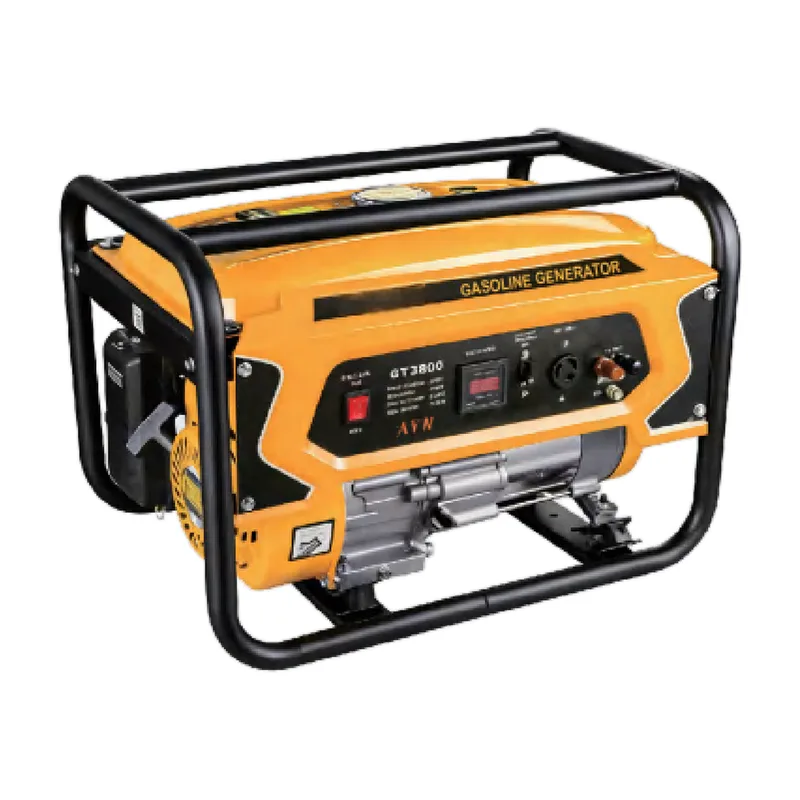
The factory side of the boundary is my side of it. The gasoline generator line — open-frame sets across the 2.5–7.5 kW classes — publishes the fields a serious importer checks, and the wider generators programme is documented the same way: per-model spec sheets, packing data, samples, and the technical-file support your certification body will ask for. Certificates are applied for in your name as the importer; I support that process with specifications, samples and documentation, and no certification logos are claimed on products.
For brand builders, the OEM scope described in the OEM manufacturing guide applies to generator programmes as well — colours, decals, packaging and labelling on proven platforms, with the same six-phase order discipline.
The practical first step is small: two or three target kW classes, your destination market, and rough volumes. That is enough for exact spec sheets and a quotation; sampling, certification support and a realistic calendar to your port follow from there. Send it through the inquiry form or WhatsApp, and I will answer with the numbers your first container will be built on.