Generator Sourcing2026-09-227 min read
Petrol vs Diesel Generators: How to Choose for Your Market
AmperTool Sourcing TeamSourcing & OEM Team
Part of the Generator Sourcing series
Part of the Generator Sourcing series
Buying guides, specs and application notes for gasoline generators — from portable models to silent types
Ready-to-ship product series related to this article
Every generator importer eventually faces the same fork: petrol or diesel. Search data shows buyers actively researching both — "diesel generator price" and "generator price" were the highest-volume queries in our category research, while "gasoline generator price" searches grew about 90% year over year and "portable petrol generator" rose about 140% in the most recent quarter (Google Trends, worldwide, retrieved 2026-09-17). Both engine types sell. The question is which one belongs in your container.
This guide compares petrol and diesel generators the way an importer actually has to decide: by power band, purchase cost, fuel economics, noise, portability and duty cycle — and maps each to the African and Southeast Asian markets where small generator sets move in volume.
Stock petrol for the 2–8 kW retail channel; stock diesel when your buyers run continuous or high-hour commercial loads. Petrol generators win the mass market on purchase price, weight and fuel availability; diesel generators win on fuel economy and durability at sustained load. Almost everything else in this decision follows from one variable: how many hours a day the machine will actually run.
| Dimension | Petrol (gasoline) | Diesel |
|---|---|---|
| Typical retail power band | 0.5–8 kW class | 8 kW class and above |
| Upfront cost | Lower unit cost in small classes | Higher, narrows at larger kVA |
| Fuel economy | Higher burn per kWh | Lower burn at sustained load |
| Fuel availability | Petrol at every filling station | Diesel widely available; road-grade vs genset-grade varies by market |
| Noise | Higher revving, open-frame units are loud | Heavier, lower-revving; canopy versions common |
| Weight and portability | Light frames, single-person carry in small classes | Substantially heavier at equal output |
| Duty cycle | Intermittent standby use | Continuous and prime power duty |
| Typical buyer | Households, shops, farms, events, small trades | Workshops, sites, telecoms, hospitals, industry |
The global gasoline generator market was valued at roughly USD 0.87 billion in 2025 and is forecast to reach about USD 1.19 billion by 2034, growing at some 3.55% per year — with the 1–5 kW power segments forming the volume core of that market (Gasoline Generator Market Size report, archived 2026-09). That is the retail heartland:
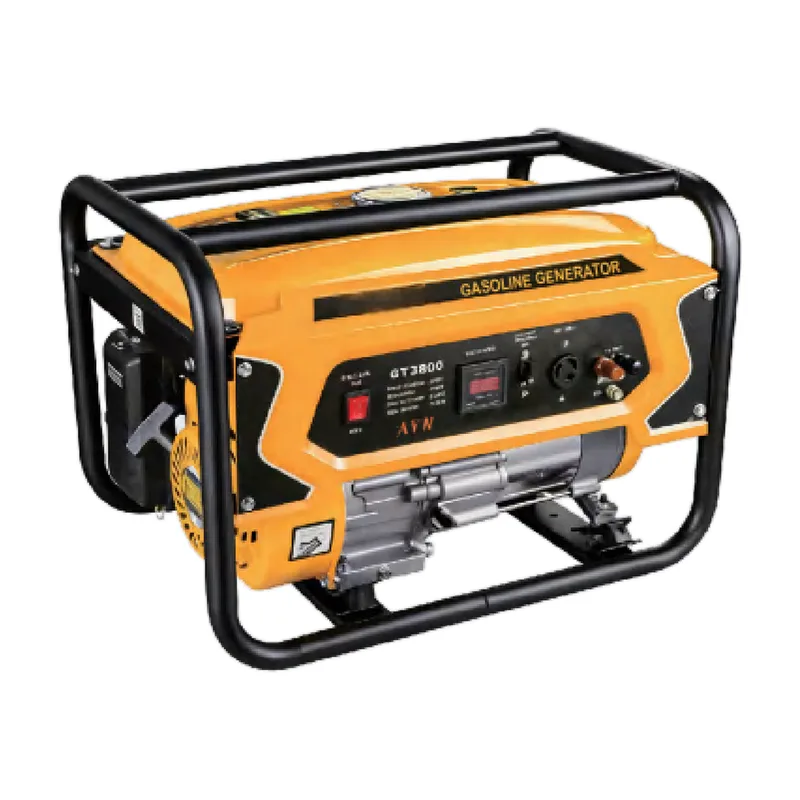
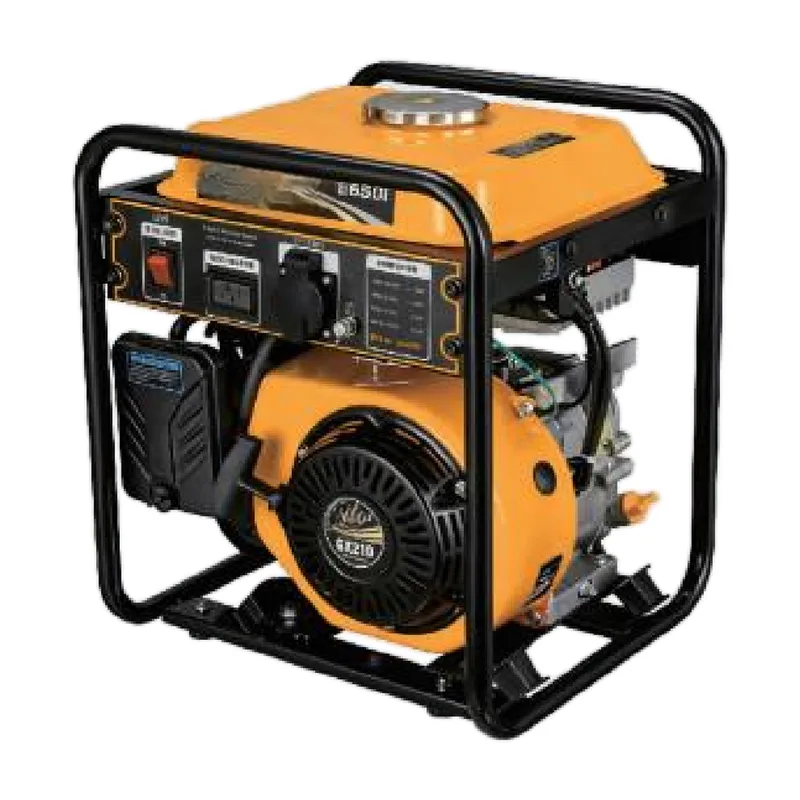
Our gasoline generator series covers exactly this band: open-frame sets from 2.5 to 7.5 kW class ratings (the AD-2500, AD-3500 and AD-6500 families), plus the AD-F inverter-style line for buyers who want quieter power for electronics.
Honesty here saves returns. Some of your end buyers should buy diesel, and pushing petrol into those applications damages a distributor's reputation:
If your customer base is primarily high-hour commercial users, the diesel-heavy assortment is correct — and the "silent diesel generator" segment (searches up about 80% YoY) is its retail-friendly face. For everyone else, read on.
Three signals from the past year of search data are worth loading into your buying calendar (Google Trends, worldwide, retrieved 2026-09-17):
Distributors who educate end buyers on these five points see fewer returns:
For importers serving the retail channel, a proven range structure is: two or three open-frame petrol families covering 2.5–7.5 kW, plus one inverter-style line for quiet-power buyers. You can review the full AD-series open-frame and inverter generator families on our generators hub, and every model ships with a factory spec sheet covering rated output, engine model, fuel tank capacity, run time and packing (CBM / G.W.) — the numbers you need for container planning. Generators also consolidate naturally with other equipment lines: many of our customers mix them with gasoline water pumps for farm-channel distribution.
All models are available under OEM terms — housing colors, tank branding, control-panel labeling and carton artwork — with samples and spec sheets before order. Tell us your destination markets and target shelf price points, and we will propose a model mix with specifications you can put in front of your customers.