Market Intel2026-09-278 min read
China Generator Export Market Trends 2026: When to Import Generators from China
LeoSourcing & OEM Specialist
Part of the Market Intel series
Part of the Market Intel series
Export trends, price drivers and product signals for power equipment importers
Ready-to-ship product series related to this article
China is where the world's small and mid-size generator sets are made. Public statistics built on customs data and summarized in trade press consistently place China's annual exports of generating sets in the multi-billion-USD range, shipped to well over a hundred destination markets — a scale no alternative sourcing base currently matches (customs-based statistics as cited in trade press, retrieved 2026-09-27). If you plan to import generators from China in 2026, you are buying into the deepest generator export market on earth: the most suppliers, the widest choice of components, and the sharpest price points per power class.
That scale is exactly why a briefing is worth fifteen minutes. The generator export market does not move as one number — demand engines differ by region, supply is concentrated in a handful of machinery clusters, and landed cost is a transmission chain of FOB price, exchange rate, ocean freight and duty. This article reads each layer for 2026 and ends with the buying decisions the readings should trigger. One discipline applies throughout: figures appear as ranges with their source type, market conditions move, and the operative number is always the quotation you hold at the moment of inquiry.
Start with the structural fact every other trend sits on. China's exports of generating sets have run in the multi-billion-USD range for years, with destination lists spanning well over a hundred markets across Africa, the Middle East, Southeast Asia, Latin America and Central Asia (customs-based public statistics as summarized in trade press, retrieved 2026-09-27). Exact figures vary by classification and by year — read the magnitude, not any single digit, as the signal.
Two features of that base matter more to an importer than its size:
For a buyer, this concentration has a practical reading: within one power class, dozens of credible factories quote genuinely similar machines, so differentiation moves to specification discipline, documentation quality and quotation transparency — not to who owns a mysterious advantage.
Where do China's generator exports actually land? Three regional engines account for most developing-market volume, and each wants a different machine.
| Region | Demand engine | Machine classes in demand | Channel pattern |
|---|---|---|---|
| West and East Africa | Chronic grid gaps; retail electricity substitution | 2–8 kW open-frame petrol sets; inverter lines for electronics | Dealer shelves and hardware trade; sharp per-unit price points |
| Middle East / Gulf | Project cycles, events, rental fleets, summer peaks | Silent canopy sets; larger petrol and diesel classes | Specification-driven project and rental procurement |
| Southeast Asia | Typhoon and storm seasons; flood and outage backup | 2–7.5 kW petrol household sets; portable classes | Retail chains and hardware stores; seasonal spikes |
Africa: the grid gap runs the retail channel. Energy-agency outlooks estimate that roughly 600 million people in sub-Saharan Africa live without access to grid electricity, with methodology moving estimates up or down by tens of millions (energy-agency outlook coverage, retrieved 2026-09-27). Where the grid is unreliable, a generator is not backup equipment — it is primary infrastructure for shops, cold storage, welding workshops and households, purchased through the same hardware channels that sell power tools and pumps. Nigeria is consistently reported among the continent's largest generator import markets, and the pattern repeats across West and East African economies: demand is steady, price-led and concentrated in the petrol classes.
The Middle East: projects pay for silence. Gulf demand is project-shaped — construction programmes, events, rental fleets and seasonal peak loads — and it buys to specification. The regional preference for quiet running is pronounced: canopy and low-decibel designs dominate urban, hospitality-adjacent and event applications. If your buyers are Gulf-side, the product conversation starts with noise class and duty rating rather than price per kVA; our silent generator guide covers how decibel ratings are specified and compared.
Southeast Asia: weather writes the order calendar. Typhoon and storm seasons convert directly into backup-power purchases: households and small businesses buy ahead of and immediately after weather events, while island and rural grids keep a baseline of demand running between seasons. The selling pattern is retail — chains and hardware stores moving 2–7.5 kW petrol sets — with volumes that spike regionally around storm activity. Importers who land containers ahead of the season, rather than into it, capture the spike at full margin.
The invoice you receive compresses a short, localized cost stack:
Read the stack this way: engine and alternator together dominate material cost, so small-generator pricing inherits commodity markets more than factory wage movements. When steel or copper run, quotes move; when they are calm, quote stability becomes mostly a currency and freight question — which is the next section.
You do not need to predict markets to buy well; you need to know how each variable transmits into your cost.
Model all three as ranges on top of FOB, and the landed-cost picture stops being a guess. The mechanics of consolidating a mixed container — CBM arithmetic, weight limits, loading plans — belong to the process side of importing; see our how to import generators from China walkthrough for that layer.
Across the three demand engines, one band recurs: the 2–8 kW petrol set. It is the volume core of the gasoline generator wholesale market — the class that sells through dealer shelves in Lagos, hardware chains in Manila and Gulf project suppliers alike — because it hits three thresholds at once: a purchase price households and shops can absorb, one-person portability in the smaller classes, and fuel available at every roadside station.
The band has a hard boundary. Above roughly 8 kW, or wherever the set runs many hours daily, diesel takes over on fuel burn and durability. The division of labour between the two engine types — and how to split an assortment between them — is its own analysis; our petrol vs diesel generator market guide walks it in full. The short version for a developing-market retail programme: open-frame petrol families carry the volume, one quieter inverter-style line serves noise-sensitive buyers, and diesel fills the commercial end for high-hour customers.
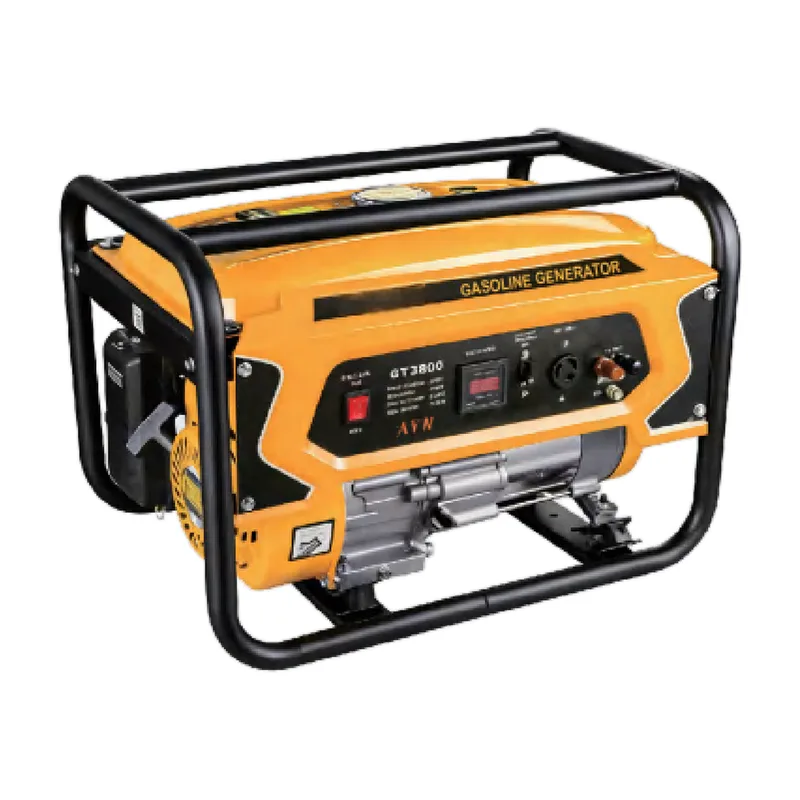
You can review the gasoline generator series that covers this band — open-frame families from the 2.5 to 7.5 kW classes plus inverter lines — each with full spec sheets, packing data and per-container loading counts.
A market briefing earns its keep only if it changes what you do. Four responses fit the 2026 readings:
Your 2026 procurement decision checklist:
Every layer described in this article — commodity-linked component costs, currency transmission, freight allocation — is information a middleman can blur and a factory can show you directly. Working factory-direct means the FOB reference you receive is a dated market reading rather than a re-stamped number with a trading-company margin inside it: current spec sheets, packing and per-container counts, and reference prices quoted against the specification you froze, with the quotation date on them. That is what market transparency looks like in practice — numbers you can build a landed-cost model on. The full generator catalogue ships with that documentation baseline.
The readings here are dated 2026-09-27; the generator export market moves, and the operative numbers are the ones quoted at your moment of inquiry. If the 2026 picture fits your programme, the next step is a specification conversation: send your destination market, target power classes and annual volume, and I will return a model mix from the gasoline generator line with spec sheets and current FOB reference prices — under OEM terms if your market needs its own branding, with the order mechanics covered in my OEM manufacturing guide. Ask for every quotation with the date on it, and hold your own market reading to that standard.