OEM Import Playbook2026-09-278 min read
Pre-Shipment Inspection and OEM Sampling: A Practical QC Playbook
LeoSourcing & OEM Specialist
Part of the OEM Import Playbook series
Part of the OEM Import Playbook series
Step-by-step OEM sourcing: inquiries, sampling, QC, container loading and import logistics
Ready-to-ship product series related to this article

How to import generators from China, end to end: verifying a China generator supplier, confirming kW/kVA specs for your market, importer-owned certification, TT/LC payment terms, pre-shipment inspection and spare parts — written for importers into Africa and Southeast Asia.

How CBM calculation and a disciplined container loading plan decide your freight cost per unit: carton math with a worked example, 20GP vs 40HQ usable volume, heavy versus volumetric cargo, mixed loading ratios, and the pre-order loading checklist.

From RFQ to loading: the six-phase OEM process for custom-brand power tools — sampling, production, inspection — with the documents and pitfalls at each step.
Of the disputes that surface after a container of power tools has sailed, one category shows up more than any other: the goods do not match the sample the buyer approved. The housing color drifted, the kit contents changed, the logo prints off-register — and the discovery arrives at the worst moment: the order paid, on the water, landing at your port. Industry surveys and inspection-agency reporting consistently place quality and specification discrepancies among the most common dispute categories in China sourcing, and first-attempt pre-shipment inspection failure rates are commonly reported in the 20–30% range across consumer and hardware goods (third-party inspection industry reporting, retrieved 2026-09-27).
None of that argues against factory-direct sourcing — it argues for running the quality segment of the order with the same rigor as the commercial one. The protection is procedural, not luck: a sealed golden sample, a factory QC process that leaves written records, and a pre-shipment inspection run against a written AQL plan. This guide goes deep on that segment, where orders are actually won or lost. For the full path from RFQ to loading, the companion OEM power tools manufacturing guide walks the six-phase process end to end; this piece stays inside the sampling and inspection phases.
Sampling is where the standard for the whole order is set. The first sample exists to convert a spec sheet into a physical object you can test; the confirmation sample — what the trade calls the golden sample — exists to freeze that object as the reference for production and inspection. Treat both as contract documents, not courtesies.
The golden sample does three jobs at once:
Sealing practice matters as much as approval. Seal two or three identical approved units and sign across the seal: one stays with the factory as the production reference, one travels to you, a third can go to the agency running your final inspection. Approve the sample you will actually reproduce — a unit from production tooling, not a polished showroom piece — under daylight, not warehouse LED. On set orders, seal the full contents down to the last accessory; the contents list is part of the sample.
Sampling deserves calendar respect. Finished samples typically take one to two weeks per round after spec confirmation, and most first orders need one to three rounds before approval (supplier working ranges, retrieved 2026-09-27). Importers who compress this phase to catch a shipping window are borrowing days from the phase that sets the standard for every unit behind the sample.
Between the approved sample and the sealed cartons, a systematic factory QC process runs three gates. They matter to you as a buyer for one reason: each gate produces records, and those records are what a pre-shipment inspection later samples against.
| Gate | What it checks | What it catches |
|---|---|---|
| IQC — incoming quality control | Components on arrival: motors, switches, cords, bearings, gearing, packaging materials, checked against component specifications | Component defects before value is added — the cheapest point in the process to find them |
| IPQC — in-process quality control | First-article check at line start-up, then sampled checks through the run: fastener torque, grounding continuity, runout, label placement, housing color against the golden sample | Drift inside the run — a color shift caught at day 10 instead of day 40, after the container is booked |
| OQC — outgoing quality control | Finished units drawn from packed cartons: function, contents, cosmetics, packing data verification | Lot-level problems before the goods leave the building |
When you evaluate a supplier, ask not which certificates sit in a folder but how each gate is documented — checklists, records, photo evidence, who signs. A factory that runs these gates as a systematic process and shows you the paperwork is the one whose three thousand units behind sample one will look like sample one.
A pre-shipment inspection needs an objective definition of "pass", and the trade’s answer is AQL sampling inspection under the attribute-sampling standards: GB/T 2828.1 in China and ANSI/ASQ Z1.4 in American usage — two members of the same statistical family rooted in ISO 2859-1 that, for practical commercial purposes, produce the same acceptance tables. The logic is three moves:
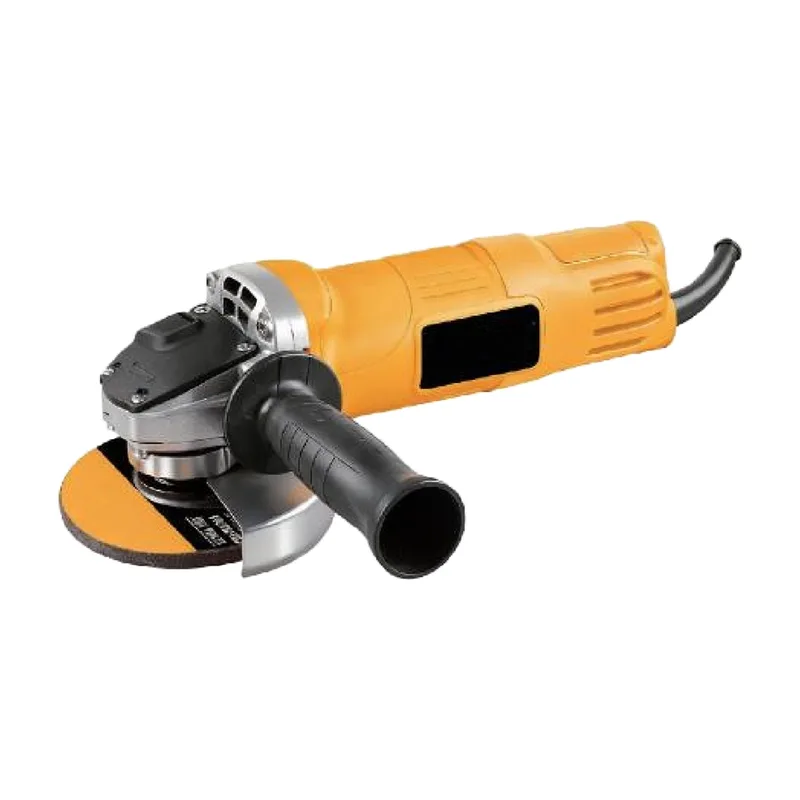
A worked example from the published tables: a lot of 3,000 angle grinders at General Level II gives sample code K — draw 125 units. At AQL 2.5 for majors, the lot passes with up to 7 major defects and fails at 8. Tighten majors to AQL 1.0 and the same draw tolerates only 3; loosen to 4.0 and it tolerates 10. Same cartons, same inspector — the plan, not the inspector, decides.
| AQL | How to read it | Where buyers commonly use it |
|---|---|---|
| 1.0 | Tight — the plan accepts a process average around 1% defective for that defect class | Safety-relevant functions, higher-value tools, retail programmes with strict QA |
| 2.5 | The trade’s workhorse — around 2.5% | General consumer hardware; the common opening position for most power tool and equipment orders |
| 4.0 | Tolerant — around 4% | Minor defects, low-risk accessories, promotional and entry-price lines |
Two honest notes. First, no regulation assigns an AQL number to a product category — the figures are a commercial agreement written into the PO, and 2.5 for majors with 4.0 for minors is the common opening position in general merchandise. Second, AQL governs inspection outcomes, not product safety compliance; compliance lives in standards and certification work, covered for EU-bound tools in the CE certification guide for power tool importers.
With the AQL plan written, the next decision is who executes it. Three modes dominate the trade, and the choice is a genuine trade-off, not a ranking:
| Mode | Strength | Watch-out | Best fit |
|---|---|---|---|
| Third-party inspection agency | Independent eyes, standardized reports, no travel for you | Day fees; needs booking lead time | First orders, distance buyers, disputed or high-value lots |
| Your own QC staff or a local agent | Knows your brand standard; marginal cost is low once in place | Travel and calendar; coverage gaps between visits | Repeat programmes with regional presence |
| Factory OQC, witnessed or photo-documented | Fastest and free of external fees; same-day remedy loops | Independence is the structural weak point | Repeat orders of proven SKUs with a clean track record |
On cost and timing, published price lists put third-party inspection in China commonly in the USD 250–350 per man-day range, agencies typically ask that goods be fully produced and largely packed — around 80% is the usual guideline — and bookings are normally made a few days ahead (inspection agency published rates and scheduling guides, retrieved 2026-09-27). The economics are simple: one man-day is a rounding error against a container, which is why experienced buyers treat third-party PSI as default insurance on first orders and graduate to witnessed factory inspections once a supplier has earned it.
Whether the clipboard is held by an agency engineer, your own inspector or the factory’s OQC team, the quality control checklist underneath should cover the same five groups:
A report that clears all five groups is not a formality. It is the document your bank, your insurer and — if the worst happens — your lawyer will all read first.
A failed inspection is a decision point, not a crisis — provided you hold three things: the defect breakdown, the golden sample, and a written process. Read the report by defect class first, because the class drives the decision:
Whatever the decision, remediated goods are re-inspected under the same AQL plan with a fresh draw. The re-inspection closes the loop, and on a first order it tells you more about the supplier than the original inspection did.
Quality claims are cheap; open books are not. Two commitments define how I work with importers on this segment. First, the full-process QC records — IQC, IPQC and OQC documentation, plus milestone photos during production — are open to customers on confirmed orders: the same three gates described above, with the paperwork available to read. Second, inspection access is unrestricted: bring your own QC staff or any third-party agency, at any stage — inline during production, before packing, at pre-shipment, during container loading — and the schedule is built around your visit, not around my convenience. For programmes that combine categories in one container, the freight-side sequence in importing generators from China shows where the inspection window sits in the overall calendar.
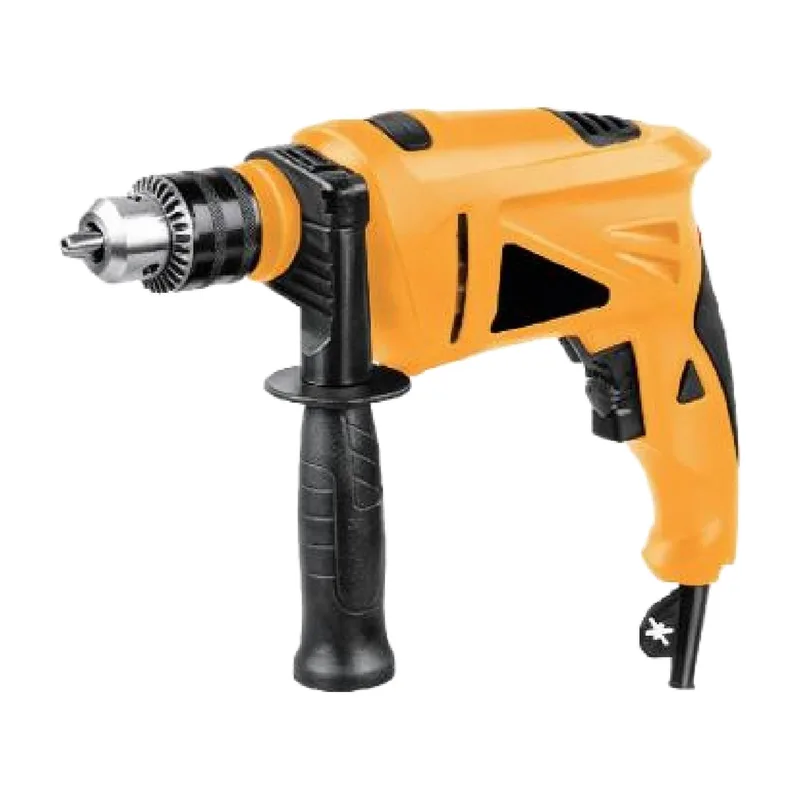
Every clean container starts as one sealed sample. The trade’s working convention on cost is the one I follow: sample unit costs are commonly waived for verified B2B buyers or credited back on the first bulk order, with courier charges moving freight-collect (supplier working conventions, retrieved 2026-09-27). Send two or three target models from the power tools programme — impact drills and angle grinders are the usual first laps — and I answer with spec sheets, a sampling calendar, and an inspection plan written into the order rather than bolted on after it.