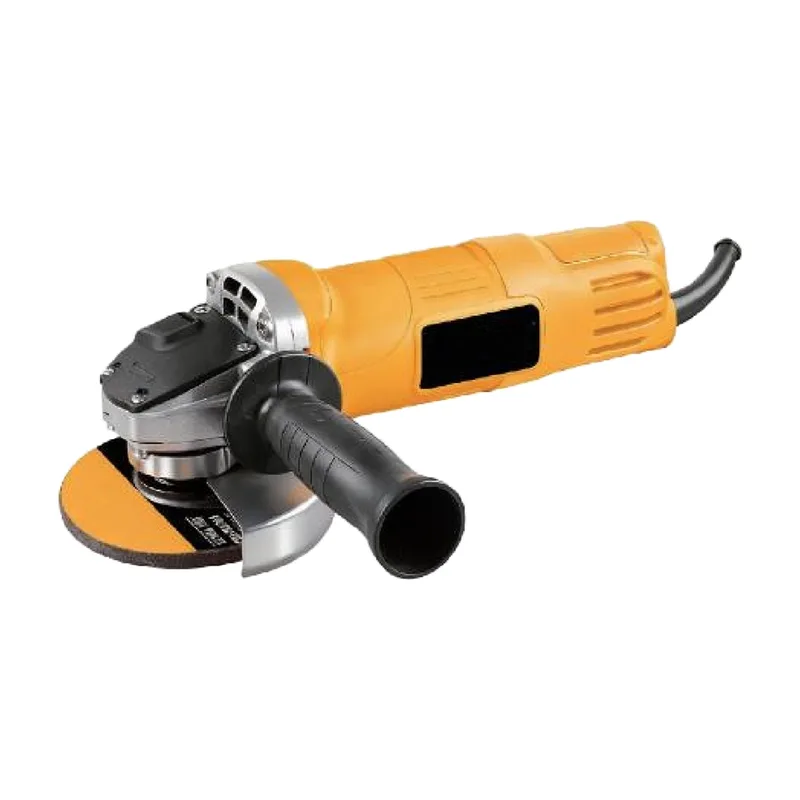
Tool Specs & Selection2026-09-229 min read
Angle Grinder Buying Guide: 115mm vs 230mm Disc Sizes
AmperTool Sourcing TeamSourcing & OEM Team
Part of the Tool Specs & Selection series
Part of the Tool Specs & Selection series
How to read power tool spec sheets and choose the right series for your market
Ready-to-ship product series related to this article
Joules, blow rate, concrete diameter class, chisel modes: every rotary hammer spec number explained, and how to match machines to trades.
Corded impact drill or cordless driver? Power, masonry ability, runtime economics and battery lock-in compared, to stock the drill mix your market buys.
Watts, chuck size, impact rate, set contents: every field on a corded impact drill sheet explained for household, trade and set buyers.
No power tool works harder for its price than the angle grinder. It cuts rebar, trims steel, grinds welds, strips rust and dresses concrete — one motor, a handful of discs. Demand signals run strong and price-led: "best angle grinder" searches are up about 90% year over year, "angle grinder price" about 60%, with "large angle grinder" (+150%) and "small angle grinder" (+100%) rising at both ends of the size range and "angle grinder safety" up about 150% (Google Trends, worldwide, retrieved 2026-09-17).
For a distributor, the category sorts cleanly around one decision — disc size — with safety features deciding the rest of the sheet. This guide walks the specs and the stocking logic for metal and construction channels.
The diameter of disc the machine is engineered for is the primary classifier:
| Class | Typical role | Typical buyer |
|---|---|---|
| 115 mm (4-1/2") | The mainstream: rebar, angle steel, pipe, sheet, grinding, surface prep | Every trade, every household with steel to cut |
| 125 mm (5") | Slightly deeper cut, same handling | Fitters preferring more capacity per pass |
| 230 mm (9") | Production cutting of structural steel, deep cuts, heavy stock removal | Structural and site contractors |
The 115 mm class outsells everything else combined in most markets: it is light, one-handed for many tasks, cheap to feed with discs, and covers the daily work. The 230 mm class is a deliberate purchase for depth and speed of cut. A third class — compact and mini machines (mini grinder interest +110% YoY) — serves detail work and the household shelf.
Power follows disc size (typical industry classes — exact figures per spec sheet):
More watts in the same disc class means faster, cooler cutting in sustained use — the difference shows in production cutting, not in occasional trimming.
With "angle grinder safety" up about 150% YoY, a counter-side safety card is a sales asset, not a compliance chore:
| Buyer situation | Recommended class |
|---|---|
| General construction, rebar and light steel | 115 mm, 700–900 W |
| Household / occasional steel cutting | 115 mm compact or mini class |
| Fitter wanting deeper cuts | 125 mm class |
| Structural steel, production cutting | 230 mm, 2,000 W class |
| Scaffold / remote work (cordless demand) | Cordless class per channel demand |
The working grinder wall: two or three 115 mm SKUs across the power band (one at the sharp price point, one with paddle switch and anti-vibration handle), one 125 mm for fitters, one or two 230 mm machines for the structural trade — then the part that pays for the wall: the disc rail. Cut-off wheels, grinding wheels, flap discs and diamond discs in both spindle threads, including the TIANLY cutting-disc line, turn one machine sale into years of reorders. The full angle grinder range (AD-25123 to AD-25230, corded and cordless models) ships with factory spec sheets for every field above, and runs under the power tools OEM programme — housing colors, kit configuration, packaging and labeling, samples before volume. Tell us the split of metalwork versus general construction in your market, and we will size the 115-to-230 ratio accordingly.