Compliance Navigation2026-09-278 min read
SONCAP Certification and PVoC: Africa Import Guide for Generators and Water Pumps
LeoSourcing & OEM Specialist
Part of the Compliance Navigation series
Part of the Compliance Navigation series
Certification pathways for importers — CE, SASO, SONCAP, EAC and PVoC — and the documentation a compliance-ready supplier provides
Ready-to-ship product series related to this article

How EAC certification works for power tools and equipment entering Kazakhstan and the EAEU: the EAC mark, the technical regulations of the Customs Union, certificate vs declaration, validity bands, and the factory’s role.

CE certification for power tools, explained for importers: why CE marking is a self-declaration rather than a certificate, which directives apply, who signs the Declaration of Conformity, and what the technical file must contain.

How Saudi conformity works for generators and power tools: PCoC and SCoC on SABER, the IECEE overlap, fee and timeline ranges, and the factory's role.
The message rarely arrives as a question about standards. It arrives as a number: day eleven of demurrage on a generator container held at Apapa, or a penalty assessment quoted across a water-pump consignment that berthed at Mombasa without a Certificate of Conformity. By the time cargo is sitting in a terminal, the cheap options are exhausted — because both of Africa's heavyweight import gates, Nigeria's SONCAP and Kenya's PVoC, are pre-export schemes by design. The certificates are issued in the country of export, before loading. There is no version of the process that starts at the destination quay.
That is why SONCAP certification is a logistics-planning query, not a paperwork afterthought. Consignments held at Lagos or Mombasa for missing certificates accumulate demurrage and storage commonly cited from tens to a few hundred USD per day per container once free time expires, and destination-side penalties can add a share of cargo value on top (freight-forwarder tariff guides and port authority notices, retrieved 2026-09-27). None of that money buys a certificate — it is pure delay cost, for documents that would have cost a fraction of the detention.
This guide walks the two systems African volume importers of power equipment meet most often — SONCAP Nigeria and the KEBS PVoC programme for Kenya — then sets them in the wider family of African pre-export verification schemes, translates all of it into a working checklist, and draws the line between the importer's job and the factory's.
Nigeria and Kenya run different labels on the same principle: pre-export verification of conformity, performed in the exporting country by certification bodies the destination authority has appointed.
For shipments leaving China, both systems live on the same practical ground: document review against the applicable standards, sampling and testing where the route requires it, physical inspection before container loading, and a certificate that travels with the commercial documents. The appointed bodies are largely the familiar global conformity firms — SGS, Intertek, Bureau Veritas, Cotecna, TÜV and peers — operating one or several African schemes out of their China offices. Appointment lists are updated periodically, so the first question to any body is a current one: are you still appointed for my destination market this quarter?
The family logic extends beyond the continent. If your programme also serves the Gulf, the Saudi SASO and SABER import guide covers that market's own two-certificate structure — the planning pattern is identical, only the platform changes.
Nigeria's system is a two-stage structure, and understanding the split is what keeps generator and pump shipments moving through Apapa, Tin Can and the land borders.
Stage one — the Product Certificate (PC). Evidence that the product itself meets the applicable Nigerian standards: built on accredited test reports, technical documentation and, on some routes, an assessment of the manufacturing setup. Product certificates come in status levels — commonly described as unregistered, registered and licensed — with validity running from a single-shipment basis at the entry level up to around a year for established exporters, and progressively lighter verification as export history builds (SON scheme documents and conformity-body guides, retrieved 2026-09-27). The practical reading: the PC is the asset you build once and reuse.
Stage two — the SONCAP Certificate (SC). Issued per consignment, against the PC, in the export country before loading. It references the shipment's details, and in Nigeria's import workflow it ties to the Form M the importer of record opens with their bank through the trade system — the SC travels with the file customs verifies at clearance. No valid SC, no release.
Where power equipment sits. Engine-driven generating sets and pumping sets fall within the regulated scope SON administers in its current list iterations. The list is periodically revised and classification details matter — rating, fuel, configuration — so the route opinion on your exact models is the first deliverable from your certification body, before any order is confirmed.
Costs and timelines. Working ranges: the SC is commonly issued within a few working days to about two weeks after complete documents and a passed pre-shipment inspection; the PC runs from days when valid test reports exist to several weeks when new laboratory testing is required. On fees, per-shipment certification commonly lands in the hundreds of USD for a straightforward consignment, with product-level application fees on top and testing extra for new programmes (conformity-body fee schedules, retrieved 2026-09-27). Treat all of it as planning ranges pending a written quotation for your assortment.
PVoC Kenya follows the same pre-export logic with a flatter structure: one certificate per consignment, with optional product-level steps to lighten repeat shipments.
The Certificate of Conformity is issued by inspection bodies KEBS has appointed in the exporting country — for Chinese consignments, in China, before loading. On the importer side, the process anchors to the Import Declaration Form obtained through Kenya's trade system, which the CoC application references. A consignment that sails without a CoC is not rejected outright by design; it is punished economically instead — destination inspection at the importer's cost plus a penalty commonly cited at 15% of CIF value, with demurrage running while the file is resolved (KEBS public notices and conformity-body guides, retrieved 2026-09-27).
For repeat shippers, the programme offers registration and licensing routes: products are registered or the exporter licensed after an initial evaluation, which reduces per-shipment intervention to documentary checks with lighter or periodic physical inspection, with validity commonly running around a year (KEBS scheme documents and conformity-body guides, retrieved 2026-09-27). The economics mirror Nigeria's: an importer shipping generators into Mombasa quarterly has no reason to run the shipment-by-shipment route for long.
Nigeria and Kenya are the two systems power-equipment importers quantify first, but the model is regional. The table below is the framework view — schemes evolve, product lists are revised, and appointment lists turn over, so verify the current position with your certification body before committing a programme.
| Country | Mechanism | Authority | Certificate | Where it happens |
|---|---|---|---|---|
| Nigeria | SONCAP | SON (Standards Organisation of Nigeria) | Product Certificate + SONCAP Certificate per shipment | Export country, via accredited bodies |
| Kenya | PVoC | KEBS (Kenya Bureau of Standards) | Certificate of Conformity per shipment | Export country, via appointed bodies |
| Tanzania | PVoC-type scheme | TBS (Tanzania Bureau of Standards) | Certificate of Conformity per shipment | Export country, via appointed bodies |
| Uganda | PVoC-type scheme | UNBS (Uganda National Bureau of Standards) | Certificate of Conformity per shipment | Export country, via appointed bodies |
| Egypt | Pre-shipment inspection for listed goods | GOEIC | Inspection certificate; exporter registration for certain categories | Export country plus registration steps |
| Ghana | Conformity assessment programme | GSA (Ghana Standards Authority) | Certificate of Conformity | Export country, via appointed bodies |
| Ethiopia | Pre-export conformity verification | Ethiopian conformity-assessment system | Certificate of Conformity | Export country, via appointed bodies |
Three patterns hold across the family, and they are what make multi-market African programmes manageable: the certificate is always obtained in the export country; the verification is almost always delegated to the same small set of global conformity bodies, so one body relationship can serve several destinations; and the certificate names the importer of record, which means your certificates are assets specific to you, not to the factory.
The technical substance of these schemes, at framework level, concentrates on a consistent set of product facts. For generating sets and pump sets, expect the verification to probe:
This is where supplier documentation quality converts directly into certification speed. A factory whose spec sheets match its nameplates and whose test reports answer the checklist questions as asked moves through pre-export verification in days; a file that has to be reconstructed by email costs weeks — and those weeks land on your shipping calendar, not the factory's.
The certificate work sits inside the wider order workflow — how it sequences with supplier selection, payments and shipping is covered in the guide to importing generators from China.
African pre-export schemes are importer-owned by design: the certificates name the importer of record, and two importers shipping the identical generator each run their own certificate path. The reliable division of work:
You (the importer) own: the certification-body relationship, the applications and fees, the certificate and validity calendar, and the decision of when a booking is allowed to be confirmed.
The factory provides: complete specification sheets per model, samples for testing, component and material documentation, nameplate and labeling coordination, and fast answers to the body's technical queries — the file that makes pre-export verification a formality instead of an investigation.
Compliance-ready OEM support means exactly this: we support your SONCAP and PVoC applications with full specification data, samples for pre-export verification and documentation follow-through. No certification logos are claimed on products — the certificate your market trusts is the one issued in your name, and that structure is what these schemes are built around.
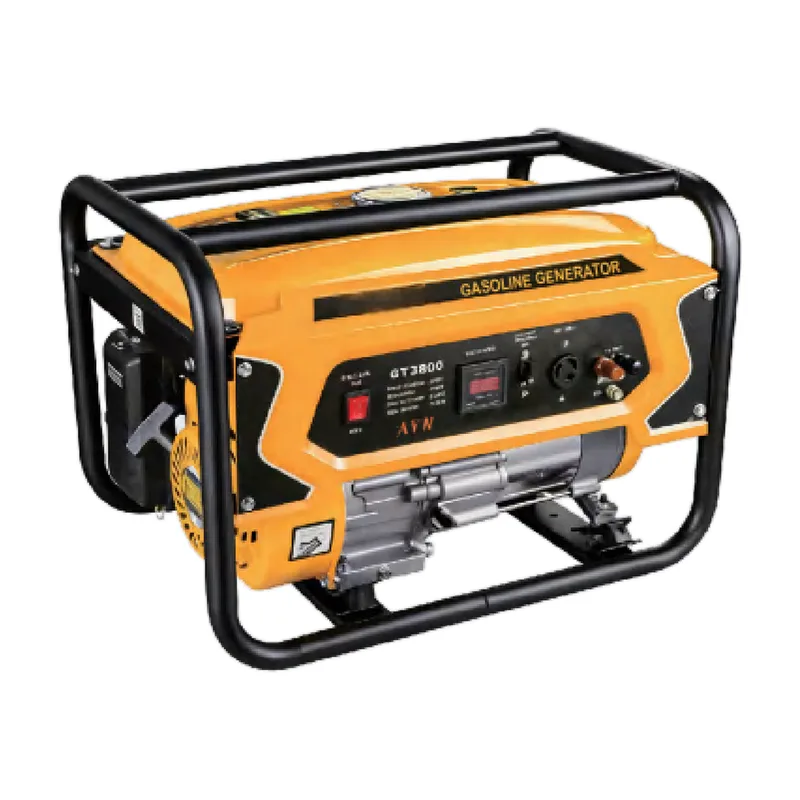
Demand across African markets for Chinese power equipment keeps broadening — the forces behind it are summarised in the generator export market trends for 2026 — and the importers winning those volumes are the ones treating conformity as part of product selection. The generator range, from the gasoline generators that anchor most African programmes, and the water pumps catalogue, including the gasoline water pumps that move alongside them in mixed containers, ship with the documentation baseline a pre-export inspection asks for.
Bring your target models, your destination markets and your certification body's requirement list, and I will assemble the specification package and arrange samples on your timeline — so the certificates are in hand before the containers are booked.