Generator Sourcing2026-09-278 min read
Portable Gasoline Generator Buying Guide: 1–5 kW Specs for Importers
LeoSourcing & OEM Specialist
Part of the Generator Sourcing series
Part of the Generator Sourcing series
Buying guides, specs and application notes for gasoline generators — from portable models to silent types
Ready-to-ship product series related to this article
What does "silent generator" mean? Decibel ratings, noise classes from open-frame to super-silent canopies, and which class fits each buyer.
Petrol or diesel? This importer's guide compares purchase cost, fuel economy, noise and duty cycle to help distributors stock the right generator category.
The portable gasoline generator is the volume engine of the small-set trade. The global gasoline generator market was valued at roughly USD 0.85–0.9 billion in 2025 and is forecast to pass USD 1.1 billion by 2034, growing near 3.5% per year — with the 1–5 kW segments forming the volume core (published market-size reports, archived 2026-09; retrieved 2026-09-27). Search leans the same way: "portable petrol generator" queries grew roughly 140% in a recent quarter and "small gasoline generator" about 80% year over year (Google Trends, worldwide, retrieved 2026-09-27). On the ground, Nigeria — Africa's largest importer of small petrol and diesel sets — keeps households and small traders shopping for affordable backup under chronic outages (IRENA/ECN Nigeria energy-roadmap coverage, archived 2026-09; retrieved 2026-09-27), while across Southeast Asia the same 1–3 kW class sells into outdoor trade, events and small sites.
That demand lands on importers as a specification problem. This guide is the spec dive for the portable band: how to read the power classes, which engine and alternator configurations set each tier, what fuel and run-time figures to expect, and how outlets, voltage and packaging match the destination channel.
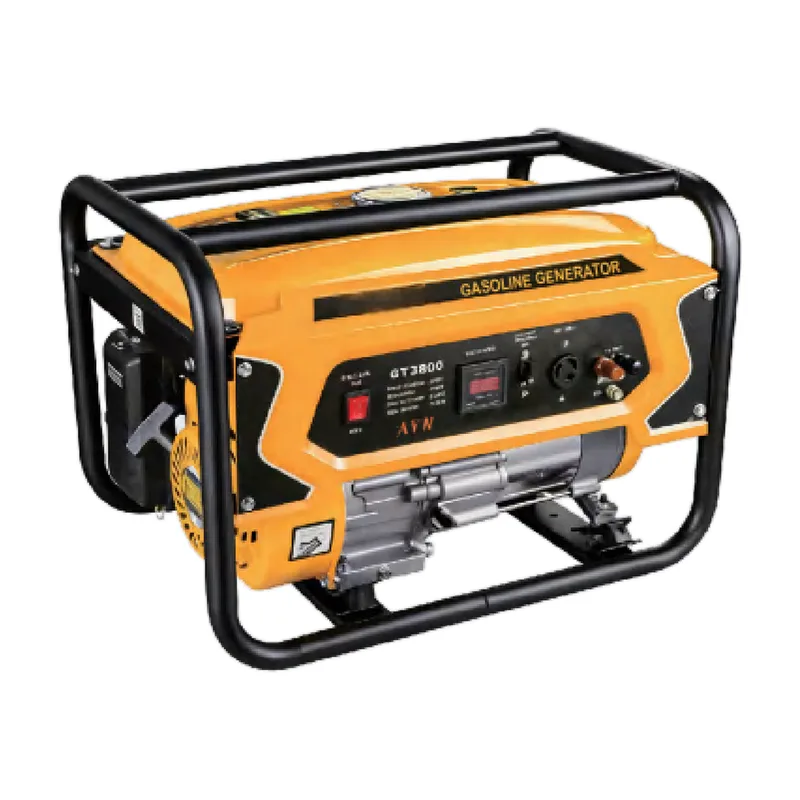
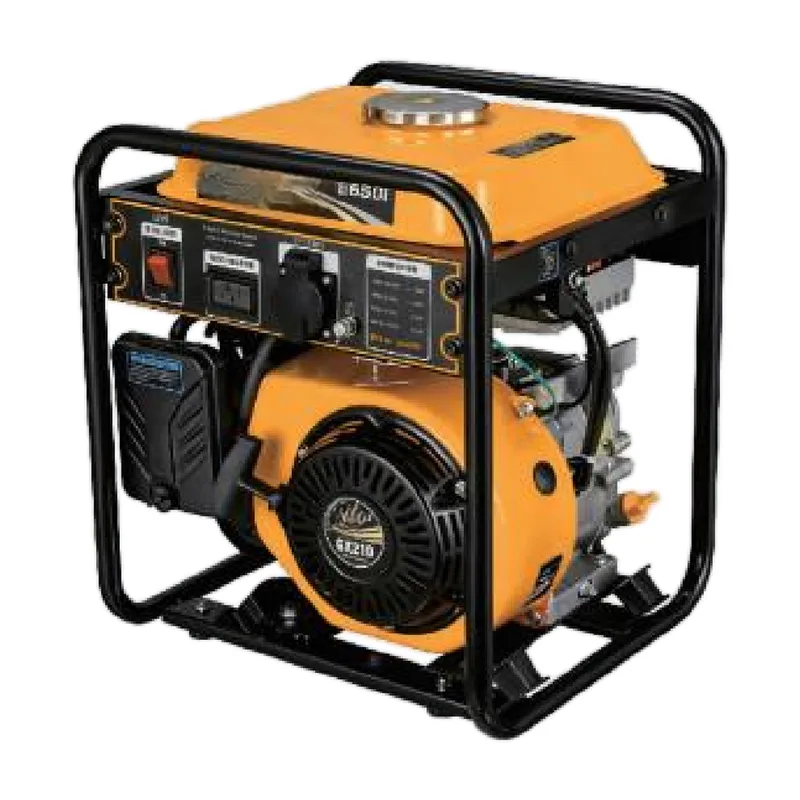
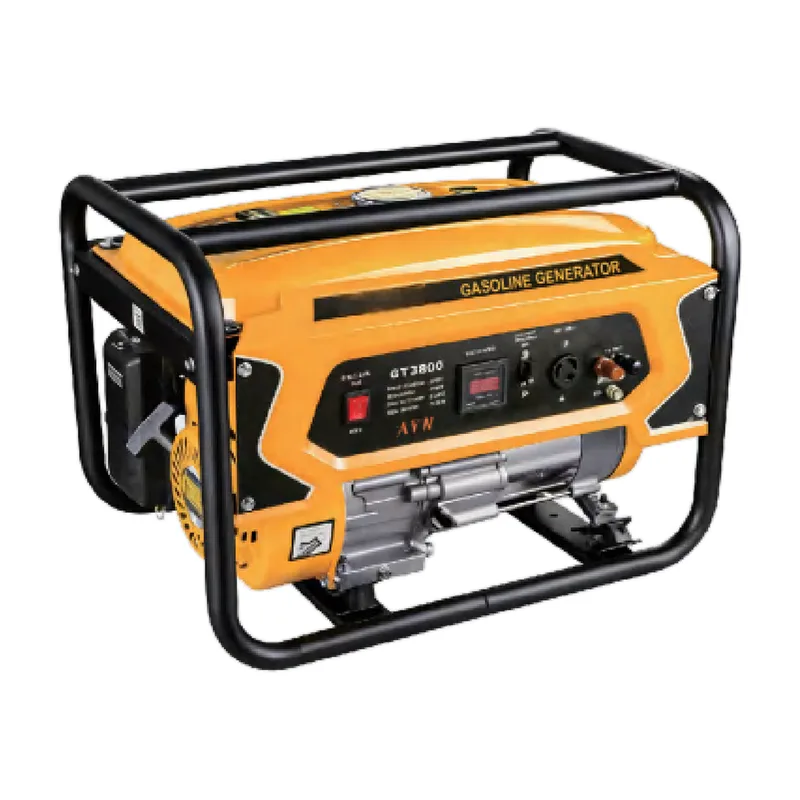
Here the term means single-phase, air-cooled gasoline sets from roughly 1 to 5 kW: the small gasoline generator you carry by hand at 1–2 kW, the open-frame 2–3 kW class moved between shop and home, and the wheel-kit 3–5 kW sets that roll around sites — almost all open-frame, the standard portable format, with enclosed and inverter classes as adjacent segments.
The guide also shares work with its sisters: the petrol vs diesel generator market guide settles engine fuel, and the decibel guide settles noise. This article assumes both are made and covers the buying specifications of the portable segment itself.
The portable band splits into three working segments, each with a distinct buyer, load list and format.
| Power band | Typical buyer and duty | Loads it realistically carries | Format and weight class |
|---|---|---|---|
| 1–2 kW | Portable generator for home emergency lighting, camping and outdoor stalls | Lights, phone charging, fans, television or laptop; a small fridge at band top | Hand-carry, roughly 18–30 kg |
| 2–3 kW | Small shops, market businesses, site lighting and tool charging, home standby for outages | Refrigerator or freezer plus lights and fans, electronics, small site tools | Open frame, roughly 35–50 kg |
| 3–5 kW | Construction sites, small workshops, farm backup, event and vendor power | Power tools, small mixers and compressors, water pumps, several circuits at once | Wheel-kit open frame, roughly 65–90 kg |
Treat the weights as industry-typical classes. What matters at assortment level is the ratio: the 2kW and 3kW generator classes are the retail heartland across African and Southeast Asian channels, with 1–2 kW pulling entry-price buyers and 3–5 kW serving trade customers.
Every spec sheet in this class carries two output figures, and they are not interchangeable. Rated power is what the set delivers continuously. Peak (or maximum) power is a short-duration overload allowance — typically 10–25% above rated on an honest sheet — for starting motor-driven appliances. Some export markets headline the peak number, which sets buyers up for breaker trips and burned expectations.
Three rules keep the assortment honest:
Within the portable band, most specification differences come down to two components.
The engine. The common-sense standard is the air-cooled, four-stroke, single-cylinder OHV (overhead-valve) petrol engine. OHV layouts run cooler, burn cleaner and hold oil service intervals better than the side-valve engines still found in the cheapest sets. The band maps onto familiar engine sizes: roughly 80–163 cc behind 1–2 kW sets, the 163–212 cc (5.5–7 hp) class behind 2–3 kW, and 250–420 cc (9–15 hp) behind 3–5 kW — standard classes also simplify the spare-parts chain later in this guide.
The alternator. This is where the price tier is really decided. 100% copper-wound alternators tolerate heat better and hold output over years of stop-start duty — the tier to specify for mid and upper slots. Copper-clad aluminium (CCA) windings cost less and define the entry tier, but aluminium tolerates sustained heat less well, so CCA belongs in price-led SKUs, not duty-heavy ones. The protection is contractual: put winding material on the purchase order as a named line item, so the tier you pay for is the tier that ships.
Fuel burn is the first operational question in every retail conversation, so the framework comes first. As industry-common ranges, small air-cooled gasoline sets burn roughly 350–450 g of fuel per kWh generated at rated load — with petrol at about 0.74 kg per liter, that is about 0.5–0.6 liters per kWh. Rule-of-thumb hourly figures at rated load:
At half load — the realistic duty for standby sets — consumption drops to roughly 60–70% of the full-load figure.
Run time is then arithmetic, not marketing: tank capacity divided by hourly consumption at a stated load. Typical tanks run 4–6 liters on the 1–2 kW class, around 15 liters on 2–3 kW and 15–25 liters on 3–5 kW — putting a 15-liter, 2.8 kW machine in the 8–12 hour bracket at half load. When a sheet claims "12 hours run time" with no load condition, ask; the number is meaningless without one.
Two options cover the band. Recoil (rope) start is the default: simple, cheap, one less component to fail — right for entry price points and site sets. Electric start adds a starter motor and battery, costs measurably more, and sells best to households, older users and small shops — anyone who has fought a cold rope start in the dark will pay for the key. Many 3–5 kW models carry both. Order starter batteries as a named line item, and keep demo-unit batteries charged — a dead battery on a showroom floor reads as a broken machine.
The electrical configuration is where portable orders most often go wrong — it must match the destination before the container ships.
The portable band is overwhelmingly open-frame, and that is a channel decision as much as a product one. Open-frame sets run in the mid-60s to mid-70s dB(A) at 7 metres — acceptable on sites, farms and day-time trade, too loud for night-time urban backup; where buyers need quiet, the answer is the canopy and inverter classes, covered in the silent generator decibel guide. The merchandise boundary is clean: open frame for the price-led site and rural channel, enclosed or inverter machines for the urban and electronics channel, in ratios that follow your market's urbanisation.
Portability is a physical specification, and it shows up in three places on an order.
The handling hardware. 1–2 kW sets carry fixed or folding handles at a weight one person manages; from about 3 kW upward, specify wheel kits — typically never-flat wheels plus a folding handle — because a 70-plus-kg frame without wheels is not portable in any sense that matters.
The carton math. Typical packing runs roughly 0.04–0.07 m³ and 20–32 kg gross for a 1–2 kW hand-carry set, 0.10–0.15 m³ and 40–55 kg for the 2–3 kW class, and 0.15–0.20 m³ and 80–100 kg for a 5 kW wheel-kit machine. Those numbers decide container plans: a 40 ft high-cube of mixed 2–3 kW stock lands in the high hundreds of units, and the CBM line on the spec sheet makes the arithmetic trustworthy.
The retail presentation. Portable generators sell from shelves and counter displays, so packaging is part of the product: printed colour boxes, spec stickers showing rated kW, run time and dB class, and manuals in the destination's languages. At the same FOB cost, a colour-boxed 2 kW set with an honest spec panel outsells its brown-carton equivalent.
The warranty is yours to set. Trade practice on small petrol sets commonly lands at 6–12 months, and the number you publish should reflect the parts and service chain you can actually run; the factory backs claims with spares and fast technical answers. Manuals deserve line-item status: destination-language instructions on starting, oil service, load guidance and safety cut support costs on the machines least likely to have a technician nearby.
The consumables that keep this band alive are spark plugs, air and fuel filters, engine oil, recoil ropes and springs, AVR modules and starter batteries — all standard, all cheap, and behind a large share of "the generator is broken" complaints that are really ten-minute services. A common planning range is a spares kit worth a few percent of unit volume per shipment: enough to honour warranty claims, keep demo units alive and seed the aftermarket counter that follows generator sales. For the sourcing workflow around the order itself — supplier vetting, sampling, payment and shipping — see how to import generators from China.
Condensed into one matrix, these are the decisions that define a portable programme:
| Decision | What to lock on the spec sheet | Why it matters downstream |
|---|---|---|
| Power band mix | Rated kW per SKU, peak stated separately | Assortment matches channels; fewer overload returns |
| Engine tier | OHV, four-stroke air-cooled, cc class | Duty capability, fuel burn, spare-parts availability |
| Alternator | Winding material: 100% copper vs CCA | The tier and longevity claim you can defend at retail |
| Fuel burn and run time | g/kWh or L/h at stated load; tank size; run time with load condition | The first two numbers every buyer asks |
| Electrical configuration | Voltage/frequency, socket set, AVR, 12 V output, breakers | Destination legality and shelf fit |
| Starting | Recoil vs electric; battery as named line item | Price point and buyer convenience |
| Frame and packaging | Wheel kit, handles, CBM, G.W., carton quantity | Container plan and handling in channel |
| Retail kit | Colour box, manual languages, spec stickers | Sell-through at the point of sale |
| Spares and warranty | Plug/filter/AVR/battery attach rate; published warranty terms | Claims cover and aftermarket revenue |
Every line above maps to a field we quote. The portable gasoline generator catalogue carries the factory spec sheets behind this guide — rated and peak output, engine class, tank and run time, dB figures and packing data — and the wider generators sourcing hub covers adjacent classes as your assortment grows. Request the full specification tables and current FOB references for your shortlist, and the container arithmetic becomes a worksheet rather than an estimate.
Tell me the channels you serve — household retail, trade counters, site supply, outdoor and events — and the bands each one moves, and I will propose a model mix you can put in front of your customers. The range ships on OEM terms — housing colours, tank decals, control-panel labelling, colour-box artwork and manual languages — with samples and spec sheets before volume. Spare-parts packs are quoted per shipment, and for Africa-bound programmes the factory supports your conformity work with documentation and samples under the structure described in the SONCAP certification guide for Africa. Send your target bands and destination markets, and the enquiry comes back as a specification, not a brochure.