Pump Sourcing2026-09-278 min read
Irrigation Water Pump and Drainage Pump Guide: Selecting by Application
LeoSourcing & OEM Specialist
Part of the Pump Sourcing series
Part of the Pump Sourcing series
Water pump selection guides for irrigation, drainage and domestic supply
Ready-to-ship product series related to this article

How importers select a domestic water pump range: self-priming, booster, submersible well and jet pumps, reading pump head and flow rate at the duty point, voltage by market, and a channel decision matrix.
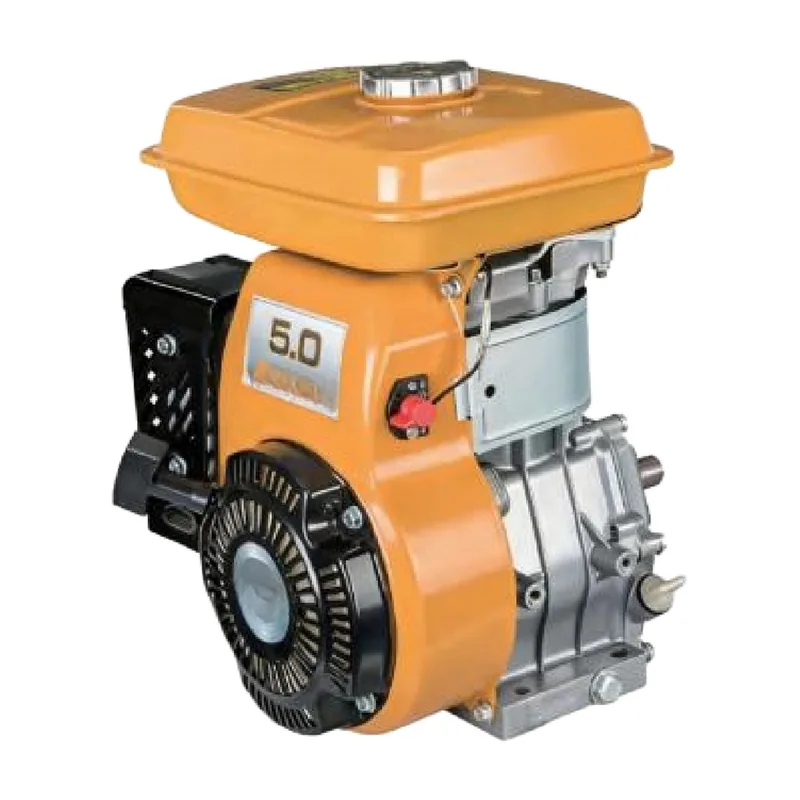
Flow rate, head, suction lift, port size: every spec on a gasoline water pump sheet explained, mapped to irrigation, drainage and construction use.
Agriculture is the largest water user on the planet by a wide margin: global freshwater withdrawals for agriculture are commonly cited at around 70 percent of the total, and the share runs higher still across the arid economies of Central Asia, the Middle East and North Africa (FAO-class water-use statistics, retrieved 2026-09-27). In most developing markets those withdrawals are moved by machines — and an irrigation water pump that fails mid-window is not an inconvenience but a crop loss on a deadline.
For importers serving agricultural-input dealers, water-programme contractors and the machinery trade, the agricultural water pump category is one of the most durable, repeat-purchase lines in water equipment. But it is two categories wearing one name. This guide organizes selection the way the field works: irrigation — delivering water where it is wanted, under pressure, on a schedule — and drainage — removing water where it is not wanted, fast, and usually dirty.
The split is not cosmetic; it changes which specification you read first: irrigation asks "at what pressure, and for how many hours?", drainage asks "how fast, and what is in the water?". The table below draws the line across the pump families an importer actually orders.
| Pump family | Side | Duty profile | Typical spec band | Water it tolerates |
|---|---|---|---|---|
| Electric centrifugal pump | Irrigation | Fixed pump station, steady duty point, long runs | 1.5–4 in, 10–50 m head | Clean, pre-filtered |
| Self-priming irrigation pump | Irrigation | Movable suction from canals, ponds, shallow wells | 1–3 in, suction lift to ~7–8 m | Clean to light debris, with strainer |
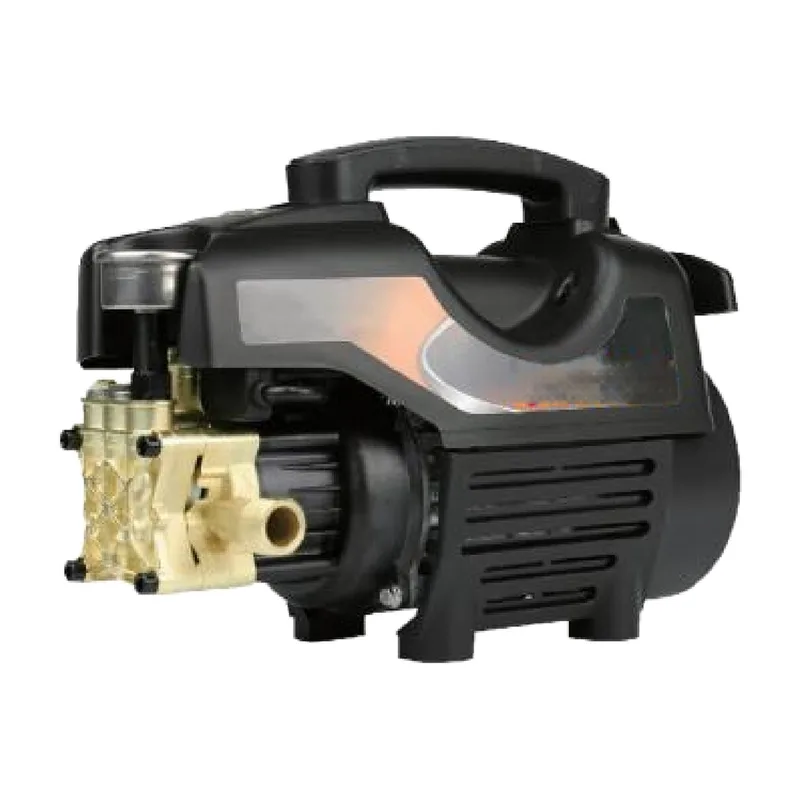
| High pressure pump for irrigation | Irrigation | Sprinkler lines, micro-sprinklers, hilly delivery | Multistage, 40–80 m and beyond | Clean, filtered |
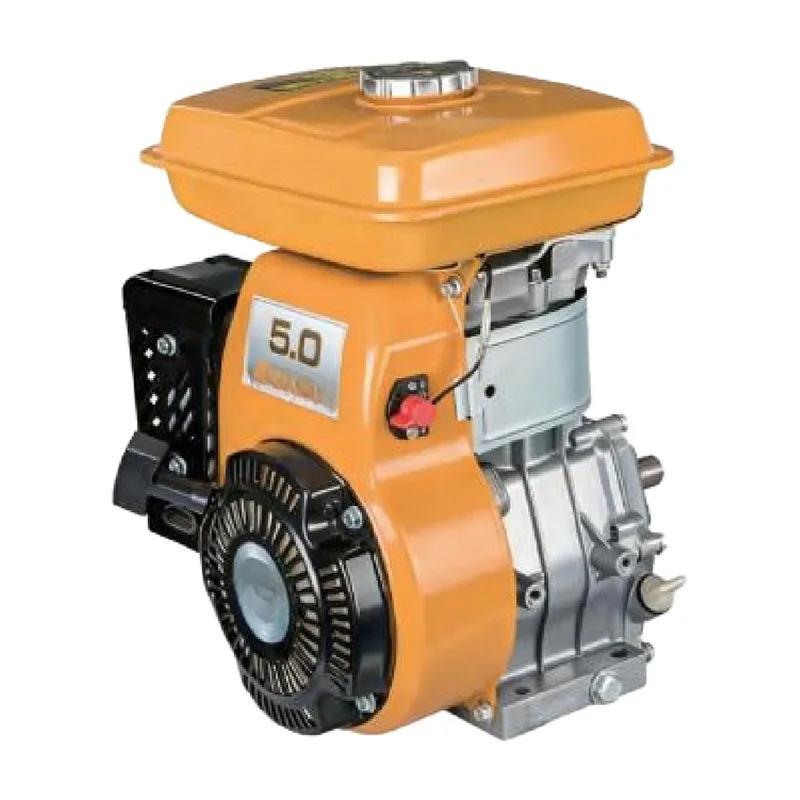
| Gasoline engine water pump | Irrigation, off-grid | Field-side delivery where no power reaches | 1–4 in, 20–35 m typical | Clean to light debris, with strainer |
| Submersible clean-water pump | Drainage | Pit and pond emptying, tank transfer | 1–2 in, high flow, 5–25 m | Lightly dirty |
| Submersible sewage pump | Drainage | Site dewatering, effluent, flood response | 2–6 in, solids passage 25–50 mm | Sewage and slurry with solids |
The families are complementary, not competing: the same customer irrigates in the dry months and drains in the wet ones, and both sides consolidate in one container.
Irrigation is a pressure business. The pump must deliver a target flow at a target pressure for hours at a time, against a delivery system — gated pipe, sprinkler line or drip network — that resists it. Four families do this work:
One boundary keeps the terminology honest. Where the duty is household rather than field — garden watering from a tank, building supply — the electric domestic pump line takes over, and the domestic water pump selection guide covers that split. Greenhouses read as low-flow irrigation with a preference for quiet electric drive.
Drainage inverts the priorities. Water arriving where it is not wanted — a foundation trench, a fish pond after a storm, a flooded field — must be moved at maximum rate, and it arrives dirty. Three families dominate:
The axis to teach buyers is high flow at low head versus low flow at high head. Dewatering an open excavation is a volume job: large port, flat curve, measured in centimetres of water per hour. Lifting water out of a deep shaft is a head job: fewer cubic metres, many more metres. Quoting one number without the other is how mismatched stock ends up discounted.
Two figures do most of the deciding on both sides, plus two gating limits.
Flow (m³/h) and head (m). Flow is volume delivered per hour; head is the height the pump must lift, plus an allowance for pipe friction — a working rule treats each significant fitting as extra pipe length, and 10 m of head corresponds to about 1 bar. Every pump has a curve: flow falls as head rises, from maximum flow at zero head to maximum head at zero flow. Neither endpoint is a buying number. The figure that matters is the duty point — the head-and-flow combination the job actually requires — and the right model passes through or slightly above it near the middle of its curve, where it runs most efficiently.
Suction lift. A surface pump pulls water up, and physics caps it: practical self-priming depths reach about 7–8 m at sea level and derate with altitude. If the source is deeper, the answer is a submersible, not a bigger surface pump.
Port size. The inlet/outlet diameter — 1, 1.5, 2, 3, 4 inch and up — sets the flow class and the hose stock you must sell alongside. Match hose bore to port; undersized hose wastes the power the buyer paid for.
The electric-versus-engine decision is a map exercise before it is an engineering one. Where the grid reaches the water — greenhouse clusters, farm buildings, municipal drainage — electric motors win on running cost, noise and fixed installation. Where it does not, the engine pump is not a compromise but the category. Common industry pairings by port class: 2-inch engine pumps carry roughly 5–7 hp, 3-inch around 7–10 hp, 4-inch around 10–16 hp; the electric equivalents sit near 2.2–3 kW for the 2-inch class and 4–5.5 kW for 3-inch. Treat these as range-setting figures and confirm exact ratings on the factory spec sheet — and treat 50 Hz and 60 Hz windings as separate SKUs, since a motor wound for one frequency shifts its duty point on the other.
The same nominal pump lasts a season or five years depending on three water classes:
Water quality is also the commercial hinge: it is what makes mechanical seals and impellers consumables rather than parts, and consumables bring the customer back.
| Scenario | What the duty rewards | Recommended configuration | Selection watch-outs |
|---|---|---|---|
| Field flood / furrow irrigation | Volume over distance | 2–4 in engine or electric centrifugal, high flow | Suction lift from canal; fuel logistics; strainer |
| Orchard drip / micro-sprinkler | Steady pressure plus filtration | Multistage high pressure pump + filter station | Pressure consistency; emitter clogging |
| Greenhouse | Low flow, steady pressure, quiet | 1–1.5 in electric multistage or booster | Corrosion-resistant materials; automation |
| Construction-site drainage | Fast removal of dirty water | 2–4 in submersible sewage pump | Solids passage; cable protection; run-dry risk |
| Fish pond / aquaculture | Gentle continuous transfer | 2–3 in low-head high-flow pump with strainer | Sandy-water wear; fish-safe screening |
| Monsoon / flood response | Maximum volume, portability | 3–6 in high-flow submersible or engine pump | Two-person handling; hose stock |
Read the matrix as an assortment tool rather than a menu: neighbouring scenarios share platforms, hose sizes and spare parts, so a range built around two or three port classes with both drive options covers most of it.
Three channels buy this category, each with a lead type. Agricultural-input dealers (farm shops and agrovets) lead with engine-driven irrigation pumps in the 1–3 inch classes, sold on seasonality. Water programmes and municipal buyers specify submersibles — sewage and clean-water — against drainage and pond-management projects. Machinery and hardware trade mixes both sides at the 2–4 inch volume classes.
Across all three, the quiet profit line is spare parts: mechanical seals, impellers, O-rings, strainers and engine service kits are small, cheap relative to the pump, and turn over for the life of the installed base. A dealer who sold fifty pumps this season has fifty seal replacements coming — the classic low-CBM, high-multiple add-on to every container, and the reason parts commonality belongs in the order conversation.
For all three: BSP threads across most of Asia, Africa and the Middle East (NPT in the Americas), and 220–240 V / 50 Hz grids across most target territories — both worth locking per order rather than assuming.
Before any model enters your container, ask for the documents that prove it: a full factory spec sheet per model with the pump curve, rated duty point, suction-lift limit, port thread, and the seal and impeller specification matched to your water class — not a headline flow figure. That documentation package is exactly what we supply factory-direct, alongside OEM terms on housing colours, carton artwork, labels and manuals, so the range lands under your brand. Samples against the spec sheet come before the volume order — the duty point is cheap to verify on a test bench and expensive to discover in a customer's field.
Irrigation and drainage pumps consolidate naturally with the rest of a water and power programme: the same container can carry engine pumps, submersibles, multistage units, a generator set to power the electric side on remote sites, and the mechanical-seal and impeller spare-parts packs that keep the installed base yours. The step-by-step import process walkthrough applies to mixed equipment shipments the same way, and the full water pump programme overview shows how the application sides sit together for container planning. Bring the duty points your market's typical jobs demand — flow, head, suction conditions and water class — and I will propose models with spec-sheet numbers you can hand straight to your channel. Start your inquiry with samples; seasons wait for no one's delivery.