Pump Sourcing2026-09-278 min read
Domestic Water Pump Selection Guide: Types, Head & Flow Rate
LeoSourcing & OEM Specialist
Part of the Pump Sourcing series
Part of the Pump Sourcing series
Water pump selection guides for irrigation, drainage and domestic supply
Ready-to-ship product series related to this article

How importers split the agricultural water pump category by application: irrigation-side pressure pumps, drainage-side submersibles, reading the flow-head curve, water-quality fit, and a scenario decision matrix from flood fields to fish ponds.
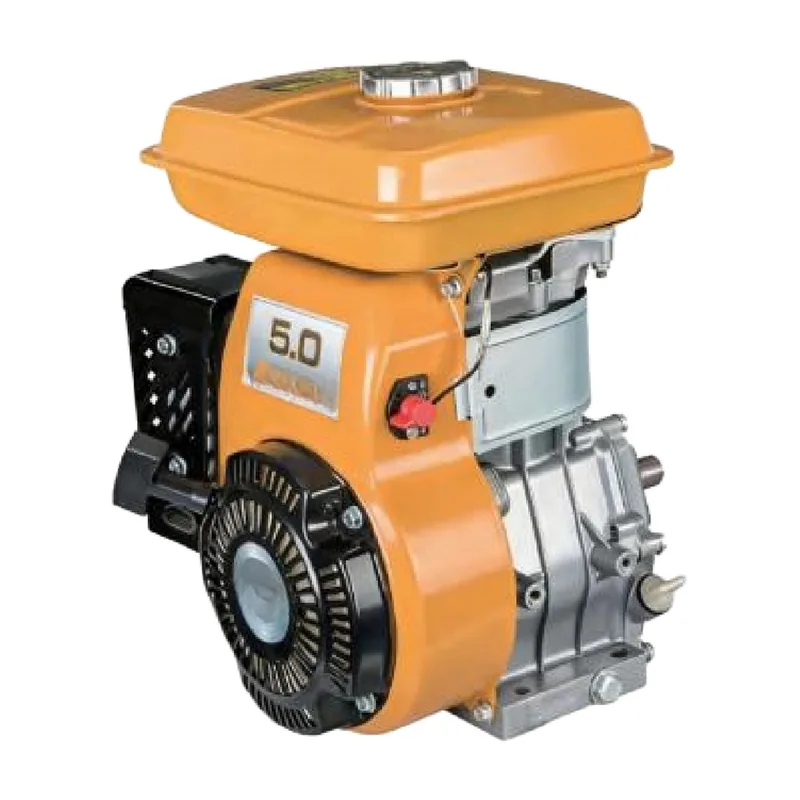
Flow rate, head, suction lift, port size: every spec on a gasoline water pump sheet explained, mapped to irrigation, drainage and construction use.
More than half of the world's population now lives in urban areas, and United Nations projections put that share near 68 percent by 2050 (United Nations World Urbanization Prospects, retrieved 2026-09-27). In the fast-growing cities of the Middle East, Southeast Asia, Africa and Latin America, construction runs ahead of water infrastructure: municipal pressure sized for single-storey homes does not reach the fifth floor of a new apartment block, and ground tanks still need lifting to the roof. The result is a structural, repeat-purchase category — every household, villa or small building that needs water moved or pressurized specifies a domestic water pump. Market research houses place the global pump market in the tens of billions of US dollars per year, with residential and building-services pumps among the steadiest growth segments (market-research estimates, retrieved 2026-09-27).
For importers serving hardware retail, water programmes, building M&E contractors and e-commerce, the household water pump is the volume core of a pump programme — and one of the most spec-sensitive lines in it. Two lookalike pumps on a shelf can serve completely different duties, and the cost of the mismatch lands on your service desk, not the factory's. This guide sets out the type boundaries, the two numbers that decide everything (pump head and flow rate), and how to convert your target channels into an order-ready range.
In trade usage, "domestic" means household-scale and electric-motor driven. Four families cover nearly the whole duty space:
| Pump type | How it works | Typical domestic duty | Strongest channels |
|---|---|---|---|
| Self-priming centrifugal pump | Mounted above the water; after one casing fill it evacuates air and lifts from a tank or shallow well | Tank-to-roof transfer, garden and rainwater use, 15–35 m | Hardware retail, agricultural-adjacent trade |
| In-line water booster pump | Fitted on a pipe that already carries water; adds pressure to weak supply | Floor-by-floor boosting in apartments and villas, 10–25 m added | Building M&E, plumbing trade |
| Submersible well pump | Lowered into the borehole and pushes water up from depth | Household supply from wells, 30 m and beyond | Water programmes, rural supply |
| Jet pump | Surface pump with a venturi nozzle down the well for extra suction lift | Shallow-to-medium wells where a serviceable surface pump is preferred | Rural retail, farm shops |
The families overlap deliberately. A self-priming centrifugal pump paired with a pressure tank or flow switch becomes an automatic household system; a booster built on a self-priming casing can both lift from a ground tank and pressurize the line above it. That overlap is exactly why range design — not a single hero SKU — is the correct buying posture for this category, and why the comparison table above is worth keeping in the assortment file.
In channel terms: hardware retail lives on self-priming transfer pumps; building M&E and plumbing contractors specify in-line boosters; water programmes and rural electrification buy submersibles; rural retail with shallow wells sells jet pumps.
One boundary keeps the terminology honest. Electric domestic pumps assume power at the point of use. Where the water source has no grid — fields, ponds, remote tanks — the duty belongs to engine-driven machines, covered by our gasoline water pump series; the gasoline water pump buying guide treats suction lift and engine-side sizing in depth and is the counterpart of this page. In mixed urban-and-rural territories, most distributors carry both: the electric domestic pump line and the engine ranges consolidate in the same container.
Two numbers do most of the deciding in this category, and both are routinely misread.
Head, in metres, is the height the pump must lift water — plus friction. The honest figure totals the vertical rise from source to highest outlet (suction lift plus delivery height) and adds an allowance for pipe runs, bends and fittings, because friction eats pressure exactly like height does. As a rule of thumb, 10 m of head corresponds to about 1 bar of pressure. Domestic duties commonly sit between 10 and 50 m; beyond that range you are leaving the household category.
Flow, in cubic metres per hour, is volume delivered. Household needs run roughly 1–8 m³/h: a single tap draws a fraction of a cubic metre per hour, while a bathroom plus kitchen plus washing machine running together sets the peak figure the pump must meet comfortably. Size to the realistic peak, not to every fixture at once.
The pump curve ties them together. Every pump's flow falls as head rises — from maximum flow at zero head (free discharge) to maximum head at zero flow (shutoff). Neither endpoint is a buying number; spec sheets that lead with a big flow figure are quoting the best case. The figure that matters is the duty point: the head-and-flow combination your installation actually requires, and where it sits on the pump's curve. The right model passes through or slightly above your duty point near the middle of its curve — the region where it runs most efficiently, with reserve for voltage dips, aging pipes and a partly clogged filter.
A worked example keeps it concrete. A two-storey villa boosting municipal feed to a roof tank 8 m up, through some 40 m of pipe and a dozen fittings, needs about 8 m of lift plus 2–3 m of friction — call it 11 m at a 2–3 m³/h peak. A 15–20 m class self-priming pump or booster covers it with margin. A four-storey walk-up on a weak street main may need 30–35 m and a different model entirely. Same shelf, same box size, different pump.
For self-priming models drawing from below, suction lift is the gating spec: practical self-priming depths reach around 7–9 m at sea level. Deeper than that, the answer is a jet pump or a submersible, not a bigger surface pump.
Domestic port classes run 1, 1.25 and 1.5 inch (25, 32, 40 mm), with 2 inch reserved for light commercial boosting. The piping rule is simple: match the pipe bore to the pump port. A reducer immediately downstream surrenders the flow you paid for; oversized pipe adds material cost without moving more water. Check the thread standard for your market — BSP common across much of Asia, Europe and the Middle East, NPT across the Americas — and confirm it on the spec sheet. Coupling and adaptor kits are a cheap, fast-turning accessory line that rides along with every pump sold.
The motor side is where ordering errors get expensive, because they surface after arrival.
| Destination market | Typical supply | Ordering note |
|---|---|---|
| Europe, Türkiye, much of Africa, Indonesia, Thailand, Vietnam | 220–240 V, 50 Hz | Standard 50 Hz export specification |
| Gulf states including Saudi Arabia | ~230 V, 60 Hz | 60 Hz winding despite the "European-style" voltage |
| Philippines | 220 V, 60 Hz | Mixed spec — order to frequency, not just voltage |
| North America, much of Latin America | 110–127 V, 60 Hz | Separate winding and capacitor specification |
Frequency is the sharper edge. A motor wound for 50 Hz runs about 20 percent faster on a 60 Hz supply: more flow and head, but higher current draw and a shifted duty point, with the start capacitor rated to the circuit. The clean practice is to treat 50 Hz and 60 Hz variants as separate SKUs in your file and order to the destination grid, not the factory default.
Motor protection is best read as classification systems rather than marketing numbers. Ingress-protection (IP) codes grade how well an enclosure resists solids and water — surface-mounted household pumps commonly sit in the drip-proof mid grades, while submersibles are sealed by construction. Insulation classes grade a winding's thermal endurance, with the mid tiers standard on small motors and the higher tier the prudent choice where ambient temperatures run hot — Gulf rooftops being the classic case. A built-in thermal protector with automatic reset is the channel-friendly feature, because it turns a stalled pump into a nuisance rather than a warranty claim. The discipline: the exact rating is a per-model fact on the spec sheet — order to the sheet, not to the category.
Body and impeller materials set both the price tier and the service story:
Note that seal quality and bearings age a pump as fast as body material does, which is why material tiering should follow the channel rather than chase one "best" material. A workable three-tier structure for a distribution range: cast iron for price-driven retail, cast iron with brass impeller for the mid tier, stainless for premium and online presentation.
In the domestic category the box is part of the product. A colour carton with the spec table printed on it, fitting pictograms and market-language text sells the pump without a salesman standing next to it — decisive in building-materials retail and e-commerce alike, and the parcel-friendly dimensions matter for online listings. Kit configuration does similar work: hose, fittings and strainer bundled with a compact self-priming pump converts a component purchase into a weekend-project purchase.
Spare parts are the quieter profit line. Mechanical seals, O-rings, start capacitors, impellers and pressure switches are small, cheap relative to the pump, and turn over for years after the initial sale — the classic low-CBM, high-multiple add-on to any container. They are also the difference between a warranty claim resolved by swap and one resolved by scrap, which is what decides reorder conversations. Parts commonality across the range keeps that list short; it is worth confirming before the order is finalized.
| Target channel | Lead pump type | Spec band to stock | Packaging and support |
|---|---|---|---|
| Building-materials retail | Self-priming centrifugal | 1–1.5 inch, 15–35 m, 0.37–1.1 kW (0.5–1.5 hp) | Colour box, multilingual text, seal and capacitor spares |
| Water-utility and rural programmes | Submersible well (jet for shallow wells) | Head banded to local borehole depths | Plain or bulk pack, cable and pipe kits |
| Building M&E and plumbing trade | In-line booster, automatic models | 1–1.5 inch, 10–25 m added, quiet class | Trade carton, spare seal kits, pressure tanks |
| E-commerce combo kits | Compact self-priming with hose and fittings | Entry power, 15–25 m | Parcel-ready retail box, bundled accessories |
Use the matrix as a consolidation tool rather than a menu: one channel's lead type is another channel's accessory sale, and fewer platforms with higher turnover beat a scattered assortment on landed cost. The full water pump programme overview shows how the domestic, engine-driven and site ranges sit alongside each other for container planning.
Every domestic model is available factory-direct under OEM terms: housing colours, carton artwork, labels and manuals built to your brand, with retail packaging developed to your market's format. The working sequence importers find smoothest: samples and factory spec sheets first, packaging template second, volume order third. Send the duty points your market's typical buildings demand plus the destination voltage and frequency, and the proposed model list comes back with the spec-sheet numbers you can hand straight to your channel.
Domestic pumps consolidate naturally with the rest of a water and power programme: the same container can carry self-priming pumps, boosters and submersibles alongside engine pumps and generator sets, and the step-by-step import process walkthrough applies to mixed equipment shipments the same way. Bring your target channels, the electrical spec for your market and the packaging format you need — I will assemble the model list, spec sheets and spare-parts proposal on your timeline. Ask for samples with your first inquiry; the duty point is easy to verify on a test bench and expensive to discover on a customer's roof.