Pump Sourcing2026-09-229 min read
Gasoline Water Pump Buying Guide: Suction Head & Flow Rate
AmperTool Sourcing TeamSourcing & OEM Team
Part of the Pump Sourcing series
Part of the Pump Sourcing series
Water pump selection guides for irrigation, drainage and domestic supply
Ready-to-ship product series related to this article
Water moves money. Global water pump demand was estimated at about USD 74.5 billion in 2025, heading toward roughly USD 103.3 billion by 2033 (Water Pump Market Size And Share Report 2026–2033, archived 2026-09) — and across the Asia-Pacific region alone the market is projected from about USD 22.8 billion in 2026 at a 4.25% annual clip (Asia-Pacific Water Pump Market Outlook 2026–2032, archived 2026-09). Within that, the engine-driven segment serves the customers the grid does not reach: farms, drainage projects and construction sites across Central Asia, Africa and island Southeast Asia. Search behaviour tracks the same story — "water pump price" queries are up about 30% year over year, and "portable water pump" about 180% among rising terms (Google Trends, worldwide, retrieved 2026-09-17).
For an importer, the gasoline water pump category is one of the most spec-sensitive lines you can stock. Two pumps that look identical on a shelf can move completely different amounts of water. This guide walks through every parameter on the spec sheet, what it means in the field, and how to match machines to buyers.
Before any spec comparison, place the buyer correctly:
| Condition | Right channel |
|---|---|
| No reliable power at the water source | Gasoline engine pump |
| Field irrigation, movable pumping points | Gasoline engine pump |
| Construction dewatering, trench pumping | Gasoline engine pump |
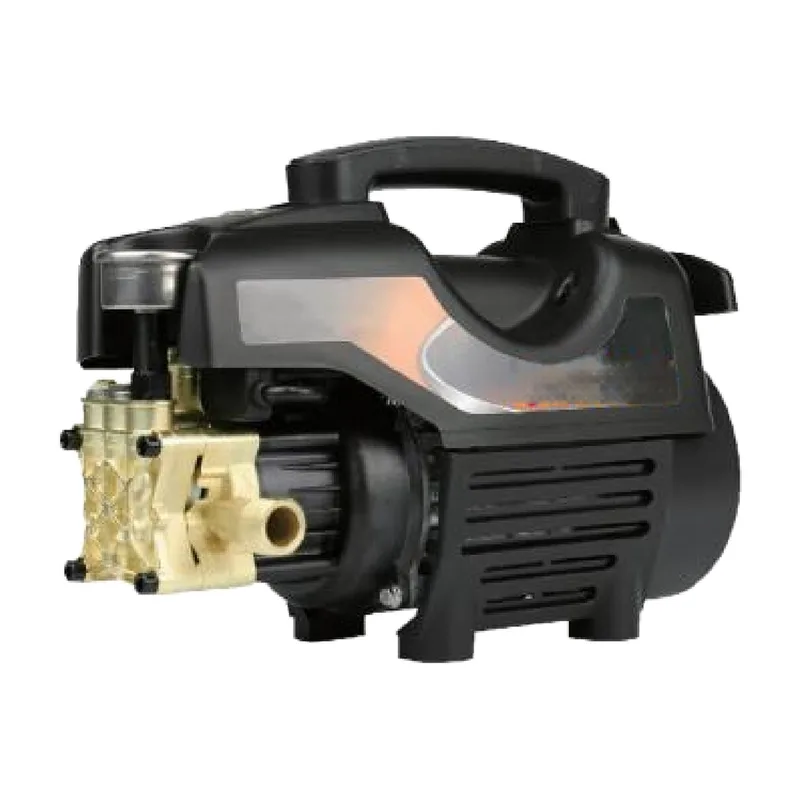
| Household supply, building boosting (power present) | Electric domestic pump |
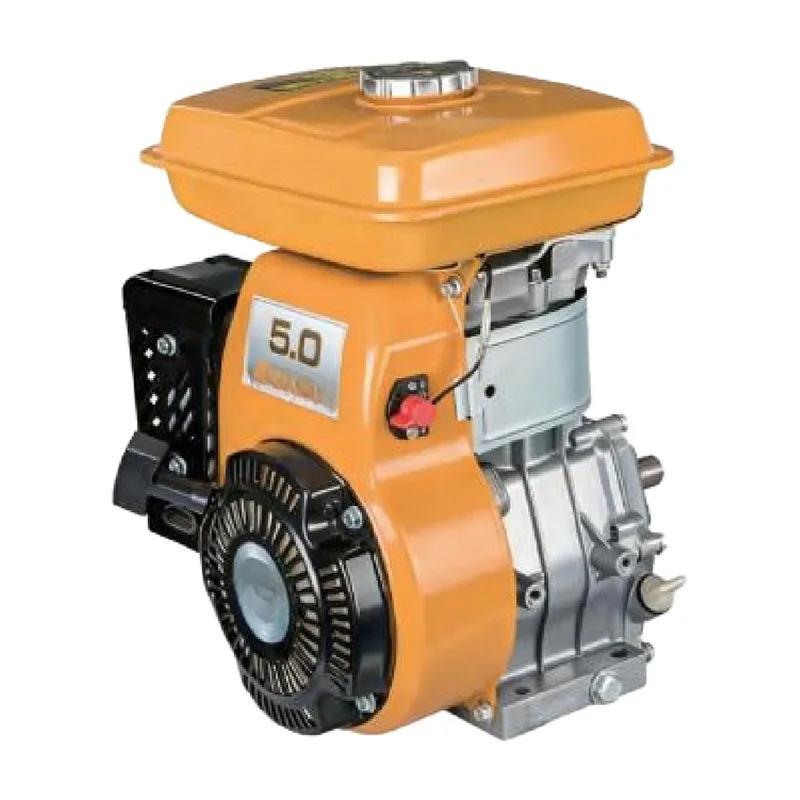
Our gasoline water pump series (the AD-25270 to AD-25319 range, 50 models with recoil-start engines) serves the first three rows; households and buildings are served by the electric domestic pump line. Carrying both lets one distributor cover an entire district's water needs — and the two lines consolidate in the same container.
Flow rate is how much water the pump moves per hour — the number that answers "will it fill my tank/field fast enough?"
A practical buying rule for your customers: add up the water needed per session and the hours available to move it, and the required m³/h follows.
Head is the vertical height the pump must lift water, plus friction losses from horizontal pipe runs, bends and fittings (a rule of thumb treats each significant fitting as extra pipe length).
The classic field failure is a pump sized on delivery height alone, then starved by a long suction hose or a partly collapsed fitting. Teach buyers to total all three.
Engine pumps sit above the water and pull it up. Two specs matter:
The inlet/outlet diameter — commonly 1, 1.5, 2 and 3 inch classes — sets the hose size and, in practice, the pump's flow class:
| Port class | Typical role |
|---|---|
| 1–1.5 inch | Drip lines, small transfer, garden and light drainage |
| 2 inch | General farm irrigation, flood plots, site drainage |
| 3 inch | High-volume drainage, dewatering, flood response |
Hose diameter should match the port. Undersized hoses waste engine power; oversized ones add cost. Fittings and adaptors are a natural accessory attach to every pump sold.
The gasoline engine determines where the pump sits in the range:
Full engine model, tank and consumption figures are on every factory spec sheet we supply for the AD-25270–25319 engine pump range, alongside the pump curve numbers above.
Before any model goes in a container, verify these fields and file them per model:
| Buyer situation | Recommended class |
|---|---|
| Drip / small plot irrigation | 1–1.5 inch, modest head |
| Furrow / flood field irrigation | 2–3 inch, medium head |
| Farm drainage, pond emptying | 2–3 inch, high flow priority |
| Construction dewatering | 2–3 inch, rugged frame |
| Household / building supply | Electric domestic line |
Regional demand context worth knowing when you plan assortment depth: irrigation-driven search is strongest around agricultural economies — the irrigation pump cluster shows solid interest in solar and drip configurations ("drip irrigation pump" +40% YoY, "agricultural irrigation pump" +70% among rising terms, Google Trends, retrieved 2026-09-17). Engine pumps remain the volume core where fields lack power; solar hybrids are a watching brief for later range extensions.
Every model in the range is available under OEM terms — housing colors, carton artwork, labels and manuals — with samples and factory spec sheets before volume orders. Pump buyers commonly consolidate with other equipment in mixed containers (a generator plus a pump is the classic farm-channel pair), which is why our gasoline generator families and engine pumps ship under the same consolidated logistics. Send us the flow, head and suction conditions your market's typical jobs demand, and we will propose the models — with the spec-sheet numbers you can hand straight to your customers.