Tool Specs & Selection2026-09-229 min read
Impact Drill Buying Guide: Power, Chuck & Spec Checklist
AmperTool Sourcing TeamSourcing & OEM Team
Part of the Tool Specs & Selection series
Part of the Tool Specs & Selection series
How to read power tool spec sheets and choose the right series for your market
Ready-to-ship product series related to this article
Rotary hammer or hammer drill? Mechanisms, SDS-Plus vs SDS-Max tooling and concrete duty compared, so importers stock the right drill line.
Joules, blow rate, concrete diameter class, chisel modes: every rotary hammer spec number explained, and how to match machines to trades.
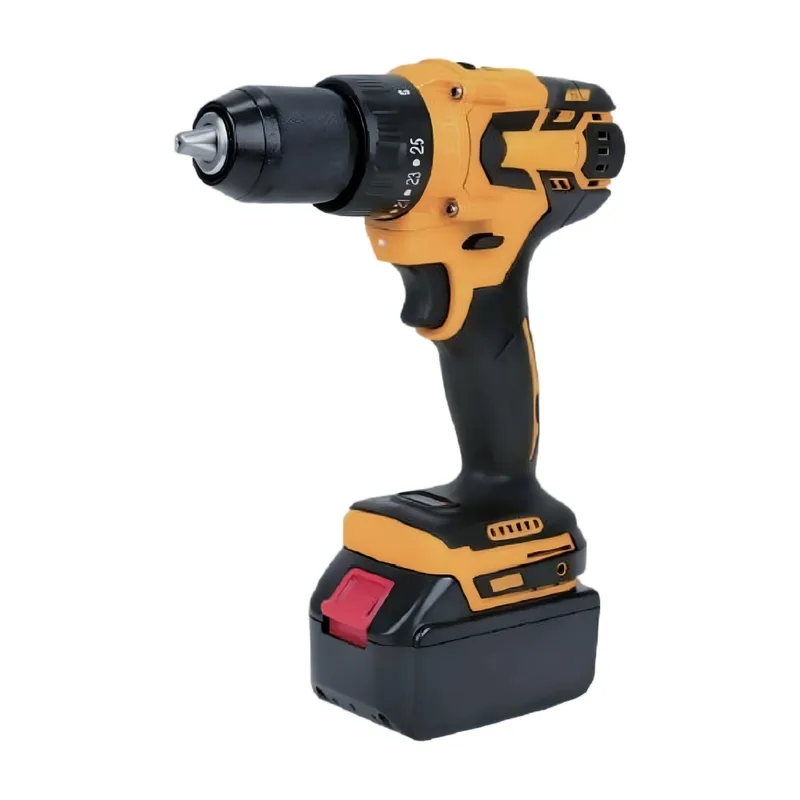
Corded impact drill or cordless driver? Power, masonry ability, runtime economics and battery lock-in compared, to stock the drill mix your market buys.
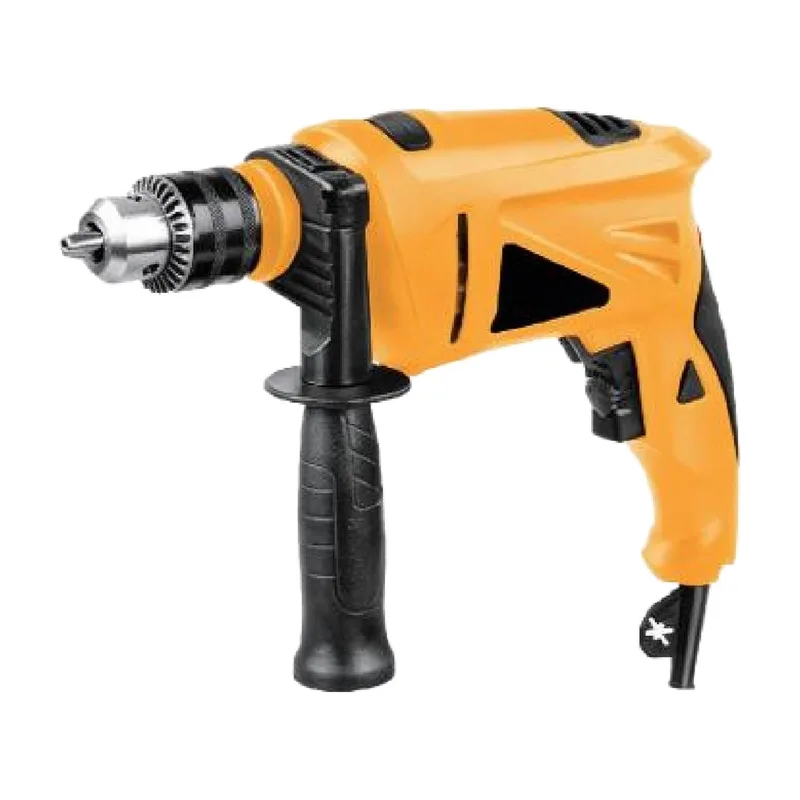
The corded impact drill is the single most-sold power tool across developing-market hardware retail — the machine that drills wood, steel and brick for the price of one motor. Search behaviour confirms its staying power while the category climbs on the technical side: "electric impact drill" interest is up about 300% year over year, "power drill" about 130%, and "impact drill machine" — the developing-market phrasing for this exact product — about 100%; "impact drill set" holds steady, sizeable volume (Google Trends, worldwide, retrieved 2026-09-17).
Because it is the entry machine for most buyers, it is also where spec-sheet confusion costs the most sales. This guide walks every field that matters on a corded impact drill sheet, and shows how to match machines to the three buyers in your market: the household, the trade, and the set shopper.
Wattage places the machine in its class and roughly predicts how it copes with long sessions and big diameters.
| Power class | Who it serves |
|---|---|
| 500–600 W class | Households: wood, steel, brick fixings |
| 700–800 W class | Daily trade use, larger bits, longer runs |
| 800 W and above | Heavy users; often better served by a rotary hammer for concrete |
(Typical classes — the exact figure belongs to the model spec sheet.) The honest note for buyers: more watts is not automatically "better drill" — it is more capability for bigger work, and the right question is what diameters and materials the buyer actually drills.
The defining feature of the class. In hammer mode:
File these per model before the container:
| Buyer | Recommended spec position |
|---|---|
| Household, occasional | 500–600 W, keyless, set with case |
| Household, gifting/retail | Set format with visible contents |
| Trade (fitter, maintenance) | 700–800 W, keyed chuck, side handle, depth stop |
| Masonry-heavy trade | Move up to the SDS rotary hammer line |
| Convenience-first buyer | Consider the cordless line — trade-offs compared in our impact vs cordless drill guide |
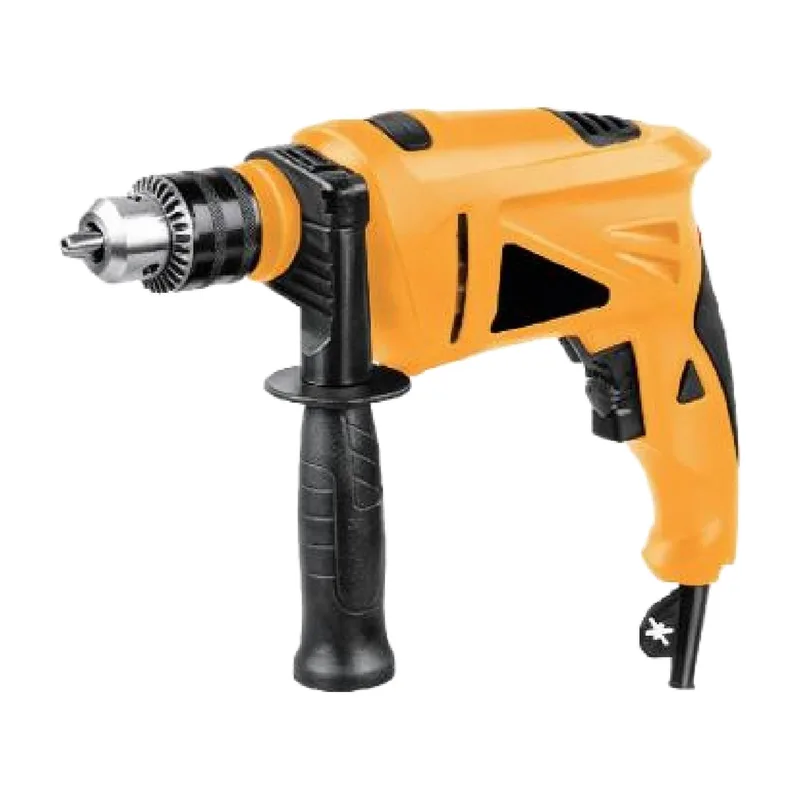
The working wall for most markets: one compact 500–600 W set SKU for the retail shelf, one 700 W-class trade machine with keyed chuck and full accessory kit, and a set configuration with visible contents list for gifting seasons. Deeper than three SKUs, the segment cannibalises itself — breadth belongs one class up, in rotary hammers. The corded impact drill range (AD-25089 to AD-25219, 44 models, 220–240 V with auxiliary handles) covers all three positions, ships with factory spec sheets listing every field above, and runs under the power tools OEM programme: housing colors, kit configuration, packaging and labeling, samples before volume. Tell us the household-to-trade split you serve, and we will propose the exact SKU ladder.