Generator SourcingPublished 2026-10-16 · Updated 2026-10-178 min read
What Size Generator Do I Need? Wattage Sizing Guide & Calculator
LeoSourcing & OEM Specialist
Part of the Generator Sourcing series
Part of the Generator Sourcing series
Buying guides, specs and application notes for gasoline generators — from portable models to silent types

How to specify a portable gasoline generator range for retail and wholesale channels: 1–5 kW power bands, rated vs peak output, OHV engines, copper-wound alternators, fuel consumption, outlets and voltage, and retail-ready packaging.
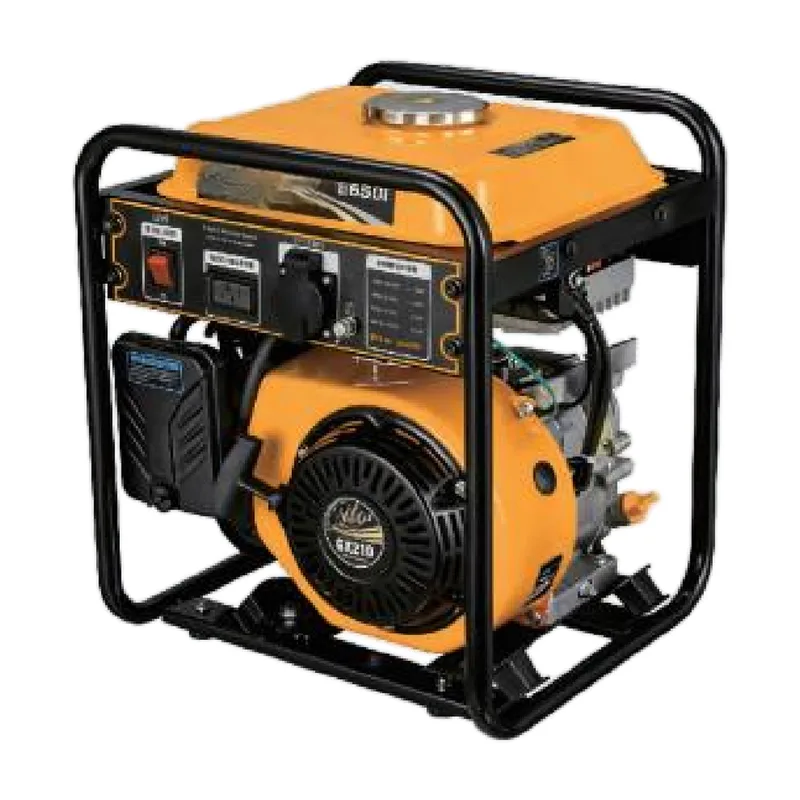
What is a silent generator and how quiet is it? Decibel ratings, noise classes from open-frame to super-silent canopies, and which class fits each buyer.
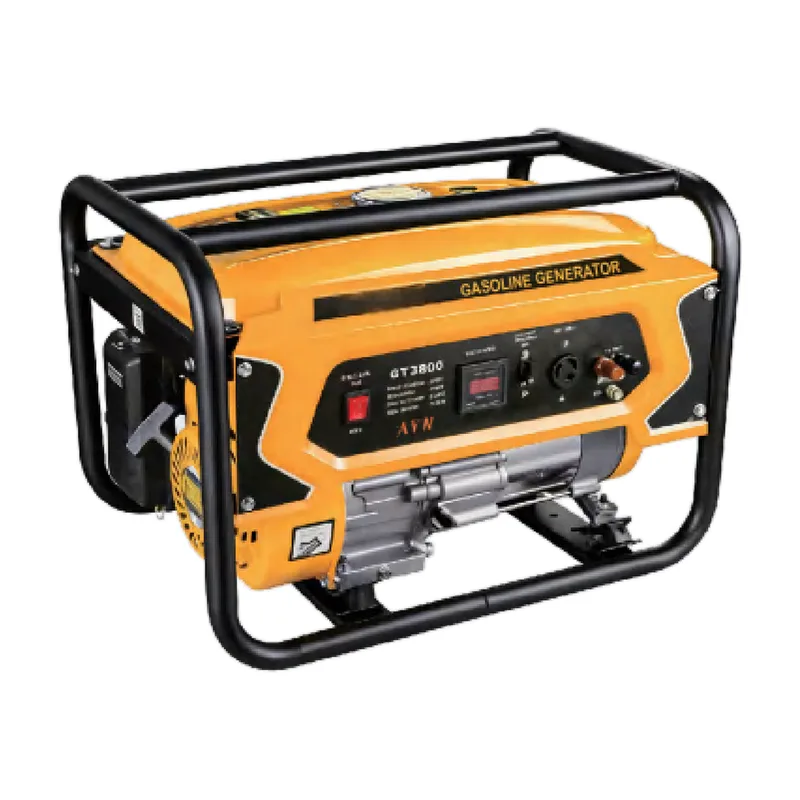
Petrol or diesel? This importer's guide compares purchase cost, fuel economy, noise and duty cycle to help distributors stock the right generator category.
A distributor's most expensive generator is the one that comes back. The machine ran, the buyer ran it — and the third time the well pump started while the freezer was on, the breaker tripped and the buyer concluded the machine was faulty. Nothing on the bench will show a defect, because there was none: the set was simply sized for a household it never had the watts to serve. In this trade, "what size generator do I need" is not a buyer's question — it is the importer's question, answered once per market segment and then printed on every listing.
The sizing method itself is short, standard across manufacturer guides, and worth doing properly. This guide walks it: running watts versus starting watts, the sum-plus-surge arithmetic, the 80% loading rule, a benchmark table of what common loads actually draw, an interactive calculator — and then the assortment logic, because for an importer the output of all this arithmetic is not one machine but a shelf: which size classes to stock, for which buyers, in what proportion. If the fuel-type question is still open, the petrol vs diesel comparison settles that track; this guide assumes the class and asks how big.
Every electrical load has two numbers. Running watts are what it draws in steady operation. Starting watts — the surge — are the extra it needs for the first seconds, and only motor-driven loads have them: a refrigerator compressor, a well pump, an air conditioner, a circular saw, an air compressor all briefly draw roughly 2–3× their running watts to overcome inertia before settling (manufacturer sizing guides illustrate the same arithmetic — Home Depot's example sizes a 350 W motor at 3× for its 1,050 W starting demand; retrieved 2026-10-16). Resistive loads — heaters, lighting, electronics — draw close to their rated watts from the first moment and add no surge.
Generator spec sheets carry the mirror pair: rated output the set delivers continuously, and peak output it can hold for a short burst. Sizing is the act of matching the two pairs — the loads' running total against rated output, the worst single surge against peak — with margin on both sides.
Three steps, in order:
A worked example, straight from the calculator's default loads:
| Load | Running W | Starting W | Running total |
|---|---|---|---|
| Refrigerator | 250 | 1,000 | 250 |
| Well pump, 1/2 hp | 900 | 1,800 | 900 |
| Television | 200 | — | 200 |
| 6 LED bulbs | 10 each | — | 60 |
| Totals | 1,410 running |
Peak demand = 1,410 running + (1,800 − 900) surge = 2,310 W. Recommended rating = 2,310 ÷ 0.8 ≈ 2.9 kW — which lands this buyer in the 2.5–3.5 kW portable class, the household standard of the gasoline market and one of the fastest-moving classes on the shelf. (Illustrative figures; the benchmark table below carries the published ranges.)
The calculator below runs the method on your own load list. Pick appliances and tools from the presets — they carry the benchmark figures from the table below — or enter custom wattages from nameplates, set quantities, and read off the totals: running watts, the largest surge, the peak demand, the recommended rating under the 80% rule, and the size class that rating maps to on an importer's shelf.
Enter the loads that will run at the same time, or pick presets. The calculator sums running watts, adds the starting surge of the largest motor, and applies the 80% loading rule from the guide above.
Two readings of the output matter most. The recommended rating is the buyer-facing number — the machine this load list belongs on. The size class is the importer-facing number — the shelf position that buyer walks to. The same arithmetic, printed as a wattage worksheet on a listing page, does the selling: the buyer who self-sizes with your chart buys the machine that serves the load, and does not return it.
Published ranges for what common loads actually draw (Champion Power Equipment generator wattage chart; retrieved 2026-10-16 — treat as planning ranges, nameplates govern):
| Load | Running W | Starting W |
|---|---|---|
| Refrigerator | 150–400 | 800–1,200 |
| Freezer | 100–500 | 500–1,000 |
| Window AC, 5,000 BTU | 450–600 | 900–1,200 |
| Central AC, 2-ton | 2,000–2,500 | 3,500–4,500 |
| Furnace fan, 1/2 hp | 300–800 | 800–1,600 |
| Sump pump, 1/3 hp | 500–800 | 1,000–1,600 |
| Well pump, 1/2 hp | 750–1,000 | 1,500–2,000 |
| Well pump, 1 hp | 1,000–2,000 | 2,000–4,000 |
| Washing machine | 500–1,000 | 1,000–2,300 |
| Microwave | 600–1,200 | — |
| Electric water heater | 3,000–4,500 | — |
| Space heater | 750–1,500 | — |
| Television | 80–400 | — |
| Circular saw, 7-1/4" | 1,200–1,800 | 2,400–3,600 |
| Angle grinder, 4-1/2" | 900–1,800 | 1,800–3,600 |
| Hammer drill | 900–1,200 | 1,800–2,400 |
| Air compressor, 1 hp | 1,500 | 4,500 |
| Pressure washer, 1,500 PSI | 1,200–1,500 | 2,400–3,000 |
| RV / trailer AC | 1,500–2,000 | 2,800–3,500 |
Read the table as three tiers. The household tier (refrigeration, fans, entertainment, lighting) fits comfortably under 1,000 running watts — entry-class territory. The motor tier (pumps, air conditioning, washing) is where the surge arithmetic lives and where undersizing bites. The worksite tier (saws, grinders, compressors) is a different market entirely — high running watts, brutal surges on compressors — and serves trades and rental counters rather than households.
For an importer, the sizing method resolves into the classes that make up a gasoline generator programme — the same classes the gasoline generator line is built around, and the same span a head-brand shelf covers (Generac's GP series runs GP2500i to GP8000E across exactly these classes; Generac GP series spec sheets, retrieved 2026-10-17):
The assortment question — how deep in each class — is answered by the same table read through your market: urban grids with frequent outages weight the middle classes; rural electrification weights the pump-capable classes; rental channels weight the worksite tier.
Three conversions carry the practical work. Watts = volts × amps — the calculator's totals translate to amps at the destination voltage, and it is amps that trip breakers and heat extension cords: 3,000 W at 230 V is about 13 A, at 120 V about 25 A. Rated versus peak output is the spec-sheet pair the sizing method matches against. And where a set is rated in kVA, multiply by the power factor (0.8 is the scheme convention) to get usable kilowatts — a "10 kVA" set serves 8 kW of load; consumer gasoline sets are rated in kW directly, so the translation mostly matters on larger installations.
One derating caveat belongs in every buying conversation: output falls with altitude and heat — highland markets and hot seasons get less machine than the nameplate says. Manufacturer guidance commonly cites derating from roughly 1,000 m of elevation; treat exact figures per model spec sheet, and size highland and hot-climate programmes one class up.
The commercial payoff of the method is that it prints. A listing that shows the load table, the sum-plus-surge arithmetic and the class recommendation does three jobs at once: it answers the buyer's real question before the support inbox does, it moves the buyer up a class honestly (the 80% rule recommends more machine than the naive sum of running watts), and it prevents the mis-sized purchase that becomes a return. Importers who publish a wattage worksheet on their generator listings are doing what Honda, Lowe's and Home Depot do on theirs — the convention is standard across the industry's sizing guides (retrieved 2026-10-16) — and it costs one page.
For the shelf behind the listing, the mapping is direct: one class per buyer segment, the 2.5–3.5 kW class deep, silent variants where the market is urban, and the worksite tier where rental and trades buy. When the programme needs the shipping arithmetic too — how many units per container, mixed with which tools — the CBM and container loading guide does for the freight what this guide does for the watts.
Every model in the gasoline generator line publishes its rated and peak output, voltage and frequency options, and packing data on its spec sheet — the exact fields the sizing arithmetic and the container arithmetic run on. Tell me the buyer segments in your market — the household mix, the pump-driven rural demand, the urban silent-tier buyers, the worksite tier — and I will propose the class split, the generators documentation package, and a sample plan that lets you bench-verify the sizing before the first container. If the destination is the Gulf, pair this with the GCC certification guide — the classes you stock are the classes that get certified.