Tool Specs & Selection2026-09-227 min read
Demolition Hammer vs Rotary Hammer: Breaking vs Drilling
AmperTool Sourcing TeamSourcing & OEM Team
Part of the Tool Specs & Selection series
Part of the Tool Specs & Selection series
How to read power tool spec sheets and choose the right series for your market
Ready-to-ship product series related to this article
Rotary hammer or hammer drill? Mechanisms, SDS-Plus vs SDS-Max tooling and concrete duty compared, so importers stock the right drill line.
Joules, blow rate, concrete diameter class, chisel modes: every rotary hammer spec number explained, and how to match machines to trades.
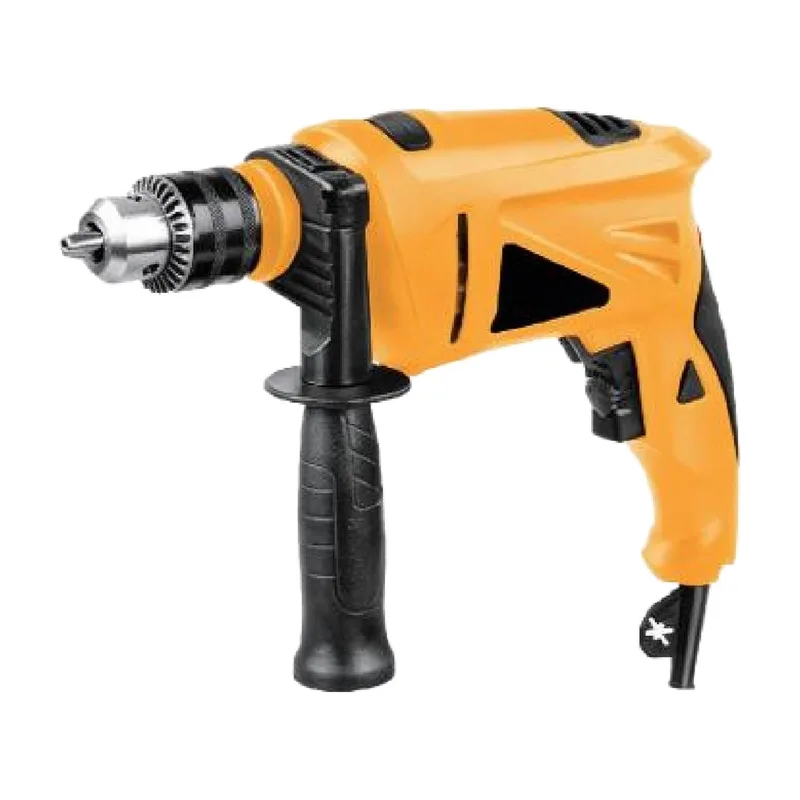
Corded impact drill or cordless driver? Power, masonry ability, runtime economics and battery lock-in compared, to stock the drill mix your market buys.
On the shelf, a demolition hammer and a rotary hammer can look like siblings — same body style, similar handles, a chisel in the box. On the job site, they are opposites: one machine is built to drill into concrete, the other to take it apart. Importers who stock them as interchangeable end up with warranty claims from breakers that were asked to drill and rotary hammers that were run as demolition machines for days.
The category signals point upward on the heavy end: "sds max rotary hammer" interest is up about 50% year over year — the tool class adjacent to dedicated breakers — and cordless heavy-tool interest is climbing broadly (Google Trends, worldwide, retrieved 2026-09-17). This guide separates the two machines cleanly and maps each to the work that pays for it.
If the money is in holes, stock rotary hammers. If the money is in teardown, stock demolition hammers. The rotary hammer drills (with chiselling as its second skill); the demolition hammer breaks (and cannot drill at all). Renovation-driven markets need both.
| Dimension | Rotary hammer | Demolition hammer |
|---|---|---|
| Primary function | Drilling concrete | Breaking and chiselling |
| Rotation | Yes (3 modes) | None by design |
| Blow energy | Moderate classes | Heavy classes |
| Shank systems | SDS-Plus / SDS-Max | SDS-Max / hex |
| Weight class | Lighter | Heavier |
| Accessories | Bits, core cutters, chisels | Points, flats, spades, scrapers |
| Typical buyer | Installers, site crews | Renovation and demolition contractors |
| Volume position | Larger market | Specialist, higher ticket |
The demolition breaker line (AD-25237 to AD-25245, shipped with chisel sets) is built for exactly this duty cycle.
For the drill-first side of the range, see the SDS rotary hammer line and the rotary hammer vs hammer drill comparison for where the lighter percussion machines fit.
For most catalogues, the pairing is one rotary hammer range (see above) plus a compact breaker range two to three SKUs deep with different energy classes, and a solid chisel assortment beside them. Renovation-heavy markets justify a third, heavier breaker class. Both lines sit naturally alongside the rest of the power tools category and consolidate in the same containers.
We supply both lines under OEM terms — housing colors, kit configuration, packaging and labeling, with chisel sets bundled per model — and every machine ships with a factory spec sheet (impact energy, impact rate, weight, packing data) plus samples before volume. Tell us the split of drilling versus teardown work in your market, and we will propose the range proportions that match it.